
A buyer who pays for an unfinished apartment is, in practice, extending credit to the developer. The paper held in return decides how much of that money is protected if the project fails. In Georgia, the gap between a signed contract, a pre-registered right and registered ownership can be the gap between owning an asset and holding an unsecured claim. A buyer holding only an ordinary contractual refund claim will generally be an unsecured creditor, unless another enforceable entitlement or security applies. This guide sets out what happens after developer failure, what status a buyer holds, how much capital is exposed and which checks reduce the risk.
If a property developer goes bankrupt in Georgia, your protection depends on registered ownership, preliminary registration, existing mortgages and your contract. Buyers holding only payment claims may be unsecured creditors and recover little or nothing. Check the insolvency proceedings promptly, preserve payment evidence and obtain Georgian legal advice before filing claims or negotiating recovery.

What Happens When a Georgian Developer Goes Bankrupt?
The short answer: a late building, a cash-strapped developer, a court-supervised rescue and a liquidation are four different events. The longer answer: each carries different legal consequences for the buyer, and only rehabilitation and bankruptcy require the opening of formal insolvency proceedings by a court.
Late construction is a breach of contract. The developer remains in full control of the site and the company, and the buyer’s remedies come from the sales agreement. Financial distress is a commercial condition: unpaid contractors, slowing works, missed bank instalments. No insolvency court has acted, and nothing in the registry necessarily shows it. Neither situation closes the courthouse door, though. Contractual disputes and ordinary enforcement proceedings may arise before insolvency begins, and a buyer can pursue them in either situation. Formal insolvency begins only when a court opens proceedings under the insolvency statute, and it takes one of two regimes, rehabilitation or bankruptcy.
The governing statute is the Law on Rehabilitation and the Collective Satisfaction of Creditors’ Claims, No. 7165. It was adopted in September 2020 and took effect on 1 April 2021. The official legislative record lists an amendment dated 24 June 2026 (Law No. 1764, published on 3 July 2026 and in force from 1 August 2026). On my reading, its subject is the Cape Town Convention and aircraft-equipment insolvency arrangements. It is not a new guarantee for residential off-plan buyers, and nothing in it changes the buyer position described below. As of November 2026, any reader should still work from the current consolidated text on the official Legislative Herald of Georgia, not from older summaries. The page may open on an earlier version, so check the version and date shown on screen before relying on any article number. The law states its purpose as the collective satisfaction of creditors’ claims through rehabilitation and, where rehabilitation cannot be achieved, through distribution of the proceeds from sale of the insolvency estate.
Rehabilitation: the rescue regime
Rehabilitation aims to keep the debtor operating while creditors agree a recovery plan. In a property project, that can mean construction continues or resumes, funded by the debtor’s remaining cash, new finance or a restructured payment schedule. Decisions on contracts, asset disposals and financing then pass through a court-supervised process, with an administrator or rehabilitation manager taking a central role. The exact division of powers depends on the court’s ruling and the regime opened.
Bankruptcy: liquidation of the estate
Bankruptcy applies where rehabilitation fails or is not viable. The insolvency estate is sold and the proceeds are distributed to creditors by statutory priority. The law also recognises conversion between the two regimes, so a rehabilitation can become a bankruptcy and the reverse. Construction normally stops in a liquidation unless the project is sold as a going concern.
The moratorium after the court opens proceedings
Once a court opens rehabilitation or bankruptcy proceedings, Article 55 of the Insolvency Law brings moratorium measures into play. In broad terms, they restrict enforcement against the debtor, certain payments, the taking on of new obligations and separate proceedings against the insolvency estate, subject to statutory exceptions. The exact scope and the exceptions must be read in the current consolidated text. For a buyer the practical point is simple: do not assume that ordinary civil enforcement, such as suing the developer or attaching its accounts, can carry on unchanged once proceedings are open. Claims are routed through the insolvency process, and a lawyer should confirm what remains possible in your case.
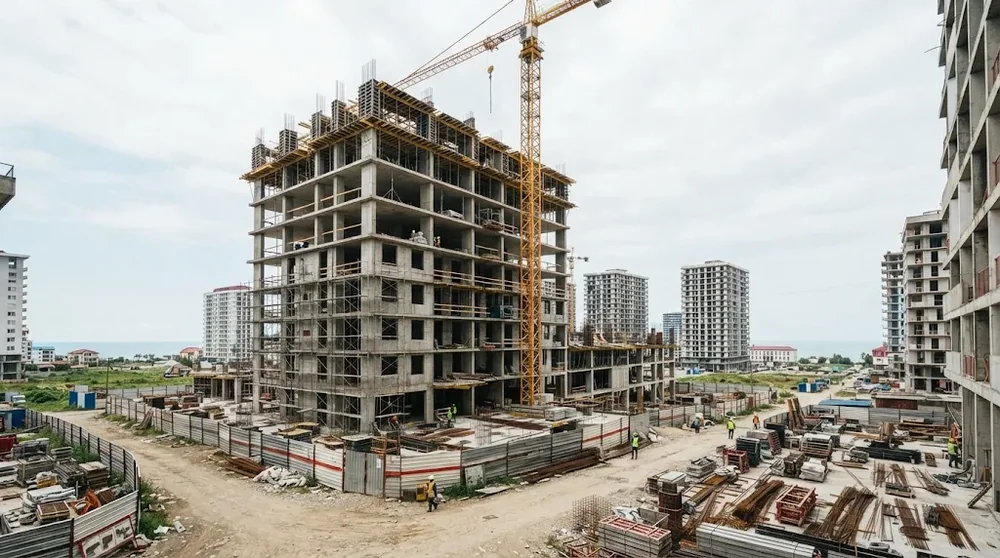
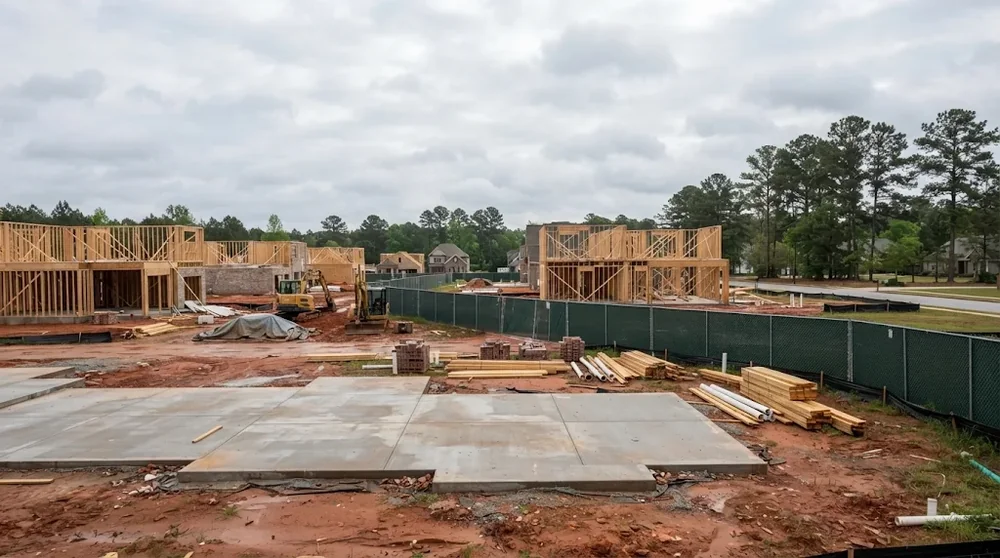
An unfinished building is not automatically abandoned. It can be completed through a plan, sold to another developer or sold in parts, and each route affects buyers differently (see the later section on takeovers).
Financial failure is also not the same as fraud. A developer that ran out of money has a civil and commercial problem. Whether anyone acted criminally is a separate question for prosecutors and courts, and buyers should not assume either answer.
One-line takeaway: insolvency does not mean liquidation, and a stalled site is not yet an insolvent developer.
Do You Own the Apartment or Just a Contractual Claim?
A buyer holds one of three distinct legal positions, and the label “bought an apartment” hides the difference. As of November 2026, the table sets out each position under the Civil Code and the Public Registry Law.
| Buyer status | Legal position | Main risk | Appropriate action |
|---|---|---|---|
| Signed contract and receipts only | A contractual claim against the seller for delivery or refund; no registered property right | Generally an unsecured money claim in insolvency, unless another enforceable entitlement applies; competing sales or mortgages may be invisible to the buyer | Obtain a registry extract, seek pre-registration where available and tie payments to milestones |
| Valid pre-registration of a future right | A registered future right under Article 12 of the Public Registry Law, which blocks registration of competing rights unless the parties agree otherwise | Not a mortgage; ends on the cancellation conditions in Article 12(4); effect against an earlier mortgage or an insolvency sale is unresolved | Read the registry entry, confirm priority date and end conditions, obtain a case-specific legal opinion |
| Registered ownership of a separate unit | Ownership acquired by written agreement plus registration under Civil Code Article 183 | Generally the strongest position, but not immune: a pre-existing encumbrance on the unit or land, a transaction that could be challenged, an incomplete registration, or a dispute over title or common-property arrangements | Obtain an extract showing you as owner, confirm no mortgage burdens the unit and have counsel review how the title was acquired |
A buyer with only an ordinary contractual payment claim ranks as a creditor, not as an owner. The status of each position is easiest to see one at a time.
Position one: contract and receipts only
Civil Code Article 183 ties the acquisition of immovable property to a written agreement and registration. A contract and a bank receipt do not, on their own, transfer ownership of an apartment. For an unfinished building the point is sharper still, because the unit may not yet exist as a separately registered object. The buyer then holds a right to demand performance, and competing rights can arise unseen: a second sale, a new mortgage, a creditor’s attachment.
Position two: pre-registration
Pre-registration records a future right to immovable property in the public registry, and Public Registry Law Article 12 governs it. As of November 2026 the law has multiple consolidated versions, so the current text matters. Four rules are worth separating from the open questions.
- Article 12(2): once a right is pre-registered, registration of another right to the same property, or abandonment of the property right, is excluded unless the parties agree otherwise. This is real protection against a second sale or a fresh registration made behind your back.
- The contractual exception: the exclusion yields where the parties agree otherwise, so read the agreement and the registry entry for any consent given to later registrations.
- Article 12(3): registration of a legal successor as owner remains possible, which matters if the land changes hands by succession.
- Article 12(4): sets the conditions on which pre-registration is cancelled. Confirm which of them could apply to your entry and when.
What these rules do not settle is equally important. Pre-registration is not a mortgage. The statutory wording does not on its face answer how a pre-registered buyer ranks against a mortgage registered earlier, what happens to the entry if the property is sold in insolvency, or how a right is identified when the unit is not yet a separate registered object. Those questions need a case-specific legal opinion, and nothing guarantees that pre-registration survives an insolvency sale.
Position three: registered ownership
A buyer registered as owner of a separately identified unit holds the strongest position available, and properly registered title generally gives far better protection than a contractual claim. It is not unconditional protection, however. The title extract should confirm that no mortgage over the unit or the land remains in place, and counsel should consider whether the transaction by which you acquired title could be open to challenge, whether registration is complete and whether any dispute over title or common areas is pending.
The Article 60 question
Insolvency Law Article 60 governs the separation of property from the insolvency estate. Article 60(1) expressly recognises that entitlement to separate property can rest on a right in rem or on an obligation claim, so a buyer’s position is not limited to registered ownership on paper. That does not make every buyer’s claim a separation claim. A signed purchase agreement does not automatically establish entitlement to separate an unbuilt apartment.
Article 60(3) deserves separate attention, because it describes a practical route for off-plan buyers. On my reading of the statute, property may be removed from the estate where the bilateral obligations have been substantially fulfilled and the agreement provides for transfer of that property to a third party. The requirements are cumulative:
- the obligations on both sides have been essentially fulfilled;
- the agreement provides for transfer of identified property;
- the manager or supervisor decides on it, following an application by the interested person.
Article 60(4) provides an exception, and its exact wording must be read in the current consolidated text. None of this creates an automatic entitlement to an unfinished apartment. Whether you can use the route depends on how the unit is identified, what your contractual rights actually say and the particular facts, including the stage of construction. A buyer should not assume that full payment, or any particular payment level, brings automatic separation. Treat the point as a legal-opinion item, not a safeguard.

Who Gets Paid First When the Developer Fails?
The short answer: secured lenders are paid from their collateral first, and a buyer with only a refund claim usually stands among the unsecured creditors. The law defines a secured creditor as one whose claim is secured by a mortgage or pledge under the Civil Code. Articles 104 and 105 of the Insolvency Law set the distribution rules. The table below follows the order in Article 104(1) for the bankruptcy distribution of the general estate, as I read it in November 2026. It is a simplified, buyer-oriented summary, and the exact ranking and the content of each category must be confirmed in the current consolidated text.
| Rank (Article 104(1)) | Claim category | Relevance to a buyer |
|---|---|---|
| 1 | Bankruptcy expenses | Paid first from the general estate; they shrink what reaches everyone below |
| 2 | Obligations arising after the opening ruling | Debts incurred once proceedings are open are distinguished from pre-opening claims; these rank above them |
| 3 | Preferential claims | Statutory preferred categories; confirm exactly which claims qualify |
| 4 | Preferential tax claims | A separate preferential tax category |
| 5 | Unsecured claims | The usual home of a buyer holding only an ordinary contractual refund claim |
| 6 | Specified interest and penalty claims | Certain accrued interest and penalties rank below the principal unsecured claims |
| 7 | Non-preferential claims | Relevant where the creditor and debtor agreed such treatment beforehand; uncommon in consumer purchases |
| 8 | Obligations arising from corporate relationships | For example claims linked to a creditor’s position as a shareholder; paid last |
Two simplifications are worth stating. The table covers the general estate only. Secured creditors are paid from their collateral under Article 105, described below, so they do not appear as a rank. The table also compresses the content of each category, which a lawyer should read against the statute.
The practical conclusion: a buyer’s refund claim and a bank’s mortgage are not equal claims, and the bank’s security usually sits ahead of them.
Mortgaged property is treated differently from the rest of the estate. Under Article 105(2), proceeds from the mortgaged asset first satisfy the relevant first-ranking secured creditor. Where proceeds remain, lower-ranking registered secured creditors are satisfied next. Only the residual balance, if any, joins the insolvency estate for the general distribution. Where the collateral proceeds fall short, Article 105(4) addresses the unsecured deficiency, which becomes a claim for the remaining shortfall. A mortgage over the land plot may, depending on its registration and terms, extend to what is built on it. The mortgage document, not the sales brochure, answers that question.
A bank construction loan is not deposit insurance. The lender finances the developer to protect its own exposure, and it owes the buyer no duty to repay the buyer’s instalments. A bank guarantee issued in the buyer’s favour is a separate instrument with its own wording, and it exists only if someone has arranged it. Where two mortgages exist, registry dates usually matter, so the ranking should be confirmed on the extract. Without a written, unit-specific release arrangement, a mortgage over the land can remain in place while buyers’ units are still unfinished.
How to Check a Developer Before Paying
Check this before you sign: the company on the brochure is often not the company on the contract. As of November 2026, a sound due diligence sequence runs as follows.
- Identify the exact contracting company. Record its full legal name and identification number, and obtain an extract from the Registry of Entrepreneurs and Non-Entrepreneurial (Non-Commercial) Legal Entities. Search by identification number, because Latin-script names vary.
- Separate the seller, the landowner and the permit holder. In my experience, many Georgian projects use a project-specific special-purpose vehicle (SPV) as seller, while the land belongs to another party under an exchange or partnership agreement, though not every project is built that way. Where separate entities are involved, ask for the underlying development, exchange, partnership or authorisation agreement itself, not a summary of it. Confirm from the text which entity may sell units, receive payments, grant title and perform refunds, and whether the arrangement can be terminated. The party responsible for refunds should be the party that holds the money.
- Check directors, shareholders and related entities. Where the extract discloses them, look for overlap with earlier companies and with the landowner. Related-party arrangements can move assets away from the SPV that owes buyers money.
- Obtain a land title extract. Use the project’s cadastral code and confirm the registered owner, area and designated purpose.
- Read every encumbrance. Mortgages, seizures, leases and pre-registrations all appear on the immovable property extract (the next section covers reading it).
- Verify the approvals, stage by stage. Compare the current approved architectural documentation, the relevant construction permit, any recorded amendments, the authorised stages and, at the end, the commissioning documentation. Check that the permit names the right holder and shows the stage of works. Authorisation for one stage does not necessarily prove approval of every future building or every unit in the marketing material, so an early-stage permit is not approval of the whole development. Ask the relevant municipal authority for permit information.
- Ask how the building is financed, and ask for documents. Request recent financial statements where available, confirmation of the project financing, evidence of committed equity, details of construction debt and its maturity, any identified funding gap and a documented completion budget with project cash flow. Private-company disclosure may be incomplete, and the absence of publicly recorded debt does not establish solvency. A project funded mainly by buyers’ instalments leaves buyers carrying the construction risk.
- Inspect completed projects. Visit them. Check that units were delivered, registered to buyers and free of the developer’s old mortgages.
- Search for current proceedings. Look for court cases, insolvency notices and enforcement activity against the seller, the landowner and related companies.
- Compare site progress with the payment plan. An independent engineer’s inspection is a modest cost against the sums at stake.
The mistake I see buyers make most often: they research the brand on the billboard and never read the registered name on the contract. An absence of visible debt is not proof of solvency either. A clean extract tells you what is recorded, not what is owed.
Overseas buyers can run this sequence remotely. Extracts can be ordered online, and a local lawyer holding a notarised, apostilled power of attorney can handle registry, municipal and court searches in Tbilisi or Batumi. Ask for English-language extracts where available. Gonio and Kvariati sit outside Batumi city. From my own experience, permit and planning records there can sit with a different municipal authority, but I have not verified the allocation of competence in a primary source, so treat this as an observation and confirm with the relevant authority which body issued the permit. Small SPVs and landowner-exchange structures are common on the Adjara coast in the projects I have reviewed, which makes steps two and three more important there, not less. Please read the SPV and permit remarks in this section as market experience, not as verified legal rules or features of every Georgian development.
How to Check Mortgages and Obtain a Release
The short answer: read the National Agency of Public Registry (NAPR) extract for the specific plot, then obtain the lender’s own written release terms. The developer’s word is not a commitment from the bank.
- Order an extract against the cadastral identifier. Use the project plot’s cadastral code, not the project’s marketing name. If your unit already has its own cadastral code, order that one too.
- Read the ownership section. Confirm that the registered owner is the party that is selling, or the party that has consented to the sale in writing.
- Read the encumbrance section line by line. Note any mortgage, the creditor’s name, the registration date and any stated secured amount. Seizures and leases should be noted as well.
- Check preliminary registrations and priority dates. Other buyers’ pre-registrations and mortgage registrations create a queue, and the date order matters.
- Ask the developer for the loan structure in writing. Request the lender’s identity, the facility purpose and whether sales proceeds must be paid to the bank.
- Approach the bank through the seller. A lender may require its borrower’s authorisation before discussing confidential facility information, and it is not obliged to disclose private lending terms to an unrelated buyer. Obtain the developer’s written authorisation for lender communication, or ask the seller to procure a bank-issued consent or release document. Here’s the clause I always look for: the bank releases the specific unit from the mortgage upon a defined event.
- Tie the release to something measurable. Examples include payment of a stated sum into a named account, or registration of your ownership. A vague promise to “release in due course” is not measurable.
- Distinguish assurance, undertaking and discharge. A developer’s email is an assurance. A release letter signed by the mortgagee, naming your unit and its trigger event, is a written undertaking and evidence of an agreed release mechanism. It does not itself discharge the registered mortgage. Discharge must be verified through the applicable registration process. Ask counsel to confirm that the undertaking is enforceable, that the unit’s identifying details are correct, what conditions attach and that the final registry entry shows the release.
- Re-check the registry before each payment. A new mortgage can appear between signing and the final instalment.
- Confirm after registration. Once your ownership is registered, the extract for your unit should show no mortgage. If the entry still appears, the undertaking has not yet done its job.
On fees, the published NAPR schedule, as retrieved in November 2026, lists a registry extract at GEL 13 via the internet with one working day processing, or GEL 52 same day. The in-person rates shown are GEL 20 and GEL 75, with an additional GEL 26 for an English-language extract. Fees change, so reconfirm them on the NAPR fees and terms page before ordering. The structure of the registry itself is set by the Law of Georgia on the Public Registry.
Contract Clauses That Reduce Bankruptcy Exposure
A contract cannot make an insolvent developer solvent. It can, however, fix who the debtor is, how payments are conditioned and what evidence exists. The table lists clause types to negotiate, with illustrative concepts. These are negotiation prompts, not legally definitive wording, and a Georgian lawyer must draft or approve the final text.
| Clause | Risk if missing | Action and illustrative concept |
|---|---|---|
| Exact legal seller | Seller differs from landowner or permit holder | Name the seller by registration number. Concept: “The Seller confirms it holds the right to sell the Unit.” |
| Unit identification | Disputes over which unit was sold | Specify cadastral code, floor, number, area and annexed plans |
| Approved plans and specification | Unapproved changes | Annex approved plans; require written consent for material changes |
| Fixed price and currency | Price escalation and currency disputes | State price and currency; bar unilateral increases |
| Objective construction milestones | Payments detached from progress | Link each instalment to a defined stage (for example, completion of the frame) |
| Documentary proof of progress | The developer certifies its own progress | Require an independent engineer’s or bank’s confirmation before payment falls due |
| Long-stop completion date | Open-ended delay | Set a final date after which refund rights arise |
| Delay penalties | No cost to the developer for lateness | Fix a daily or monthly amount accruing from the due date |
| Registered rights | No public record of your claim | Oblige the developer to cooperate in pre-registration within a set number of days |
| Bank mortgage release | Bank ranks ahead of you | Attach the bank’s unit-specific consent and release trigger as an annex |
| Refund triggers | A vague promise to “return funds” | Define events, deadline, account and any interest |
| Assignment rights | No orderly exit | Allow assignment by the buyer on notice; bar the developer from assigning without consent |
| Defects | No remedy after handover | Set a defects period and, where possible, a retention |
| Termination and dispute resolution | Unclear exit and forum | Specify notice and cure periods, governing law and forum with enforcement in mind |
| Commissioning responsibility | Nobody owns the final registration | Make the developer responsible for commissioning and unit registration by a stated date |
The practical conclusion for buyers: these clauses create enforceable duties and evidence, but they do not create security by themselves.
A contractual penalty or refund promise may still end up as an unsecured insolvency claim. If the developer cannot pay, a well-drafted refund clause gives the buyer a clear, documented claim, and that is its value. It does not move the buyer ahead of a mortgage lender. From the deals I’ve handled, buyers negotiate the price and the finish and leave the refund mechanics to the last page. Reverse that order.

Escrow, Staged Payments and Other Safeguards
These safeguards are not interchangeable. Each protects something different. In the sources I checked as of November 2026, I did not find a rule requiring escrow or a guarantee in Georgian off-plan sales. I record that as an observation, not a verified statement of the law, so confirm the current position with a Georgian lawyer. The comparison is as follows.
| Mechanism | What it can protect | Availability and conditions | Residual exposure |
|---|---|---|---|
| Verified escrow | Funds held until stated conditions are met | Only if a real arrangement exists; release conditions and account control must be independently confirmed | Depends on the conditions; counterparty and drafting risk |
| Milestone-linked instalments | Limits the money paid ahead of progress | Contractual; needs objective milestones and independent proof | Money already paid remains an unsecured claim |
| Modest reservation deposit | Limits early capital at risk | Negotiable; must be refundable on defined terms | Small, but still a claim against the developer |
| Payment retention | Leverage over defects and handover | Contractual; depends on who holds the retained sum | If the developer holds it, it is not protected |
| Bank guarantee, where available | A claim on a bank for refunds if the guarantee covers developer failure | Not standard; terms vary and must name the buyer’s claim | Limited to the guarantee’s wording, amount and expiry |
| Preliminary registration | A public record of the future right, and exclusion of competing registrations under Article 12(2) unless the parties agree otherwise | Subject to Article 12 conditions | Not a mortgage; effect against earlier mortgages and in insolvency needs legal assessment |
| Completed-property purchase | Removes construction and delivery risk | Available only for finished stock | Title, mortgage and defect checks still apply |
The table shows three separate effects, and it helps to keep them apart. The first is reducing the amount advanced: milestone-linked instalments, a modest reservation deposit and retention all limit how much capital is exposed at any moment. They can materially cut a potential loss, but they do not secure instalments already released, and those stay an unsecured claim. The second is protecting advanced funds through an independent payment arrangement: a verified escrow or a guarantee that covers developer failure keeps money out of the developer’s reach or gives a claim on a bank. The third is establishing an enforceable property or security right: registered ownership, or a registered right that holds up in insolvency, which is the only effect that changes how your claim ranks. Buying completed property removes the construction risk altogether.
Simply calling an account “escrow” provides no protection. Protection exists only where the release conditions are written, the account is controlled by a party independent of the developer, and that control is confirmed. Do not assume the bank named in the contract holds the funds in that capacity.
There is a trade-off. Limiting early payments reduces exposure but may cost you the discount or the unit, because developers often price early cash. Paying more early secures better terms but increases the amount at risk. The balance is a commercial decision, and my view is that the amount paid should stay in step with verified progress.
How Much Money Could You Lose? Three Scenarios
The figures below are hypothetical. They assume a USD 120,000 apartment and a developer that stops work after a given share of the price has been paid. “Exposure” means payments made and not yet recovered. It is funds at risk before recovery, not an established final loss.
| Scenario | Share paid | Calculation | Exposure before recovery |
|---|---|---|---|
| A: early deposit | 10% | 10% × USD 120,000 | USD 12,000 |
| B: mid-construction | 50% | 50% × USD 120,000 | USD 60,000 |
| C: near completion | 90% | 90% × USD 120,000 | USD 108,000 |
A buyer who has paid 90% of the price has USD 108,000 at risk before any recovery, and the exposure rises with every instalment paid.
To show how recovery changes the picture, the second table applies arbitrary placeholder recovery levels to each exposure. These percentages are arithmetic assumptions only. They are not estimates of what Georgian creditors actually recover, and I do not cite a recovery rate because none has been verified.
| Hypothetical recovery of the claim | Scenario A (USD 12,000) | Scenario B (USD 60,000) | Scenario C (USD 108,000) |
|---|---|---|---|
| 0% recovered | USD 12,000 unrecovered | USD 60,000 unrecovered | USD 108,000 unrecovered |
| 25% recovered | USD 9,000 unrecovered | USD 45,000 unrecovered | USD 81,000 unrecovered |
| 50% recovered | USD 6,000 unrecovered | USD 30,000 unrecovered | USD 54,000 unrecovered |
Those tables ignore secured debt, which is what usually decides the outcome. The third table is a hypothetical waterfall for a whole project. Every figure is an assumption chosen for arithmetic, and none is an observed Georgian recovery rate. It is an illustration, not a statutory distribution calculation.
| Step | Assumption | Amount (USD) | Remaining (USD) |
|---|---|---|---|
| Proceeds of the mortgaged collateral | Sale of the site and works, assumed to be entirely mortgaged property | 1,000,000 | 1,000,000 |
| Permitted costs of realising the collateral | Assumed nil here; in practice recoverable costs may reduce the collateral proceeds | 0 | 1,000,000 |
| Secured claim paid from the collateral | First-ranking mortgage | 800,000 | 200,000 |
| Residual proceeds joining the general estate | Balance left after the secured claim | 200,000 | 200,000 |
| Bankruptcy expenses | Placeholder | 60,000 | 140,000 |
| Higher-ranking claims | Post-opening obligations, preferential and tax claims (placeholder) | 50,000 | 90,000 |
| Available to unsecured creditors | Assumed unsecured claims of USD 400,000 in total, buyers included | 90,000 | 22.5% of claims |
On those assumptions a buyer with a USD 60,000 unsecured claim would receive about USD 13,500 before legal costs and delay (22.5% × 60,000). Change the secured debt to USD 950,000 and nothing reaches unsecured creditors at all. Actual allocation depends on what the collateral is, which realisation costs are recoverable and the statutory distribution rules, so no real case will follow this table line by line.
Real outcomes depend on factors the tables cannot capture. Registered ownership of a separate unit changes the legal position entirely. A buyer with a qualifying separation claim under Article 60, or a right to demand performance of a specific identifiable unit, is not in the same position as a buyer with an ordinary refund claim, and the two should not be lumped together. A mortgage over the land can absorb value that would otherwise reach unsecured creditors. A contractual refund right gives you a documented claim, though not priority. Legal costs and years of delay reduce the net result. Paying more does not automatically improve or worsen the chance of separating property under Article 60. That depends on the legal and factual position, not on the percentage paid.
What to Do If Construction Stops
This plan applies where the developer has gone quiet or stopped working, but no court has opened insolvency proceedings and the company may still be solvent.
- Preserve the paperwork. Collect the contract, all annexes, bank payment records, registry extracts and every message with the developer. Store copies somewhere you control.
- Record the site. Take dated photographs or video. An independent engineer’s short report on the stage of works is stronger evidence than your own photographs.
- Re-check the company. Order a fresh extract for the exact seller and look for changes in directors, ownership or registered address. Search for court cases and insolvency notices.
- Check the permit and the land. Confirm with the relevant municipal authority that the permit remains valid, and order a new land extract to see any recent mortgage or seizure.
- Request a formal written status and revised programme. Ask for the reason for the stoppage, a dated restart plan and the funding source. A written reply, or silence, is itself evidence.
- Take independent legal advice before changing your own behaviour. That covers stopping contractually required payments, accepting a substituted unit or building, signing a revised agreement and terminating.
- Coordinate with other buyers. Shared counsel and shared inspection costs help, and a group can often obtain information individuals cannot. Keep communications factual.
- Separate civil remedies from criminal allegations. A breach of contract is a civil matter. Whether conduct amounts to fraud is for the authorities, and an accusation without evidence can backfire.
- Keep monitoring the registry. A new mortgage, transfer of the land or sale of other units while your building is stalled is information your lawyer needs.
Unilateral payment suspension or termination can introduce new risks. The developer may treat it as your breach, apply a forfeiture clause or reduce the value of your claim. A suspension that the contract allows is different from one that it does not, which is why the advice step comes before the action step.
How to Make a Claim During Insolvency
The sequence below is procedural. As of November 2026, the periods below come from the official Insolvency Law, but the current consolidated text must be checked again before any date is relied upon, particularly as the page may open on an earlier version of the law. The periods are easy to confuse, because they bind different people and start from different events.
The procedural timeline
- Opening ruling. The court opens rehabilitation or bankruptcy proceedings. The Article 55 moratorium applies from this point, and the manager or supervisor is appointed.
- Opinions on insolvency or the requested regime (Article 51(2)). A separate 15-day period applies for submitting an opinion on insolvency or on the regime requested. It concerns the opening question, not the size of your claim.
- Register compilation (Article 52(1)). The manager or supervisor must compile the creditors’ register within 60 days after the insolvency application is declared admissible.
- Your claim where you were notified (Article 5(2)). If you received notification and your claim differs from the amount the debtor accepted, you have 30 days after receiving that notification to submit your claim.
- Your claim where you were not notified (Article 5(3)). A creditor who was never notified has 30 days after learning of the proceedings, subject to an outer limit of one year and to the applicable limitation rules.
- Restoring a missed period. Article 65 of the Civil Code allows a missed period to be restored in certain circumstances. Treat that as a rescue route for counsel to assess, not as a plan.
- Publication. The compiled register is published. The creditor-notification step and the way notices reach foreign creditors should be confirmed with counsel for the particular case.
- Challenge (Article 54(1)). A published register can be challenged within 10 days of its publication. This is the shortest and, in practice, the most dangerous clock.
Keep the clocks apart. The 15-day period in Article 51(2) is for opinions on insolvency or the regime. The 60-day period in Article 52(1) binds the manager or supervisor, not you personally. The 30-day periods in Article 5(2) and 5(3) are your claim-submission periods, and the 10-day period in Article 54(1) is for challenging the published register. A late claim is a real risk: depending on the circumstances it may be rejected or left outside the register, which would cost you your place in the distribution. The consequences in your case are for Georgian insolvency counsel to confirm. The safe course is to treat the earliest possible date as binding and to instruct counsel the same day proceedings become known.
The steps
- Verify the case. Obtain the court ruling that opened proceedings and note the case number, the debtor’s name and identification number, and the regime: rehabilitation or bankruptcy.
- Identify the correct debtor. A claim belongs against the entity that signed your contract and received your money, not the group brand. Check whether related companies, the landowner or the permit holder are separately in proceedings.
- Confirm the administrator. Identify the appointed administrator or rehabilitation manager and how that person gives notice to creditors. A buyer who is not tracking the case can miss the notice.
- Classify your claim. You may hold an ownership claim to specific property, an unsecured money claim for refund, or another registrable interest. Each has a different route and a different outcome. Article 60 is the relevant provision where property separation is sought.
- Assemble the documents. Include the contract and annexes, proof of every payment, correspondence, registry extracts and a calculation of the amount claimed. Certified Georgian translations of foreign-language documents may be needed.
- Calculate the claim in parts. Work out principal, interest and contractual penalties separately. The statute may limit what the manager or supervisor can accept without a court claim, including certain penalties and unmatured interest (Article 52(3)). Claims are recorded in national currency, GEL (Article 52(4)). A buyer claiming a USD-denominated amount should obtain advice on the conversion treatment that applies.
- Submit your claim within the Article 5 period that applies to you. Work out first whether you were notified (30 days from receipt under Article 5(2)) or not (30 days from learning of the proceedings under Article 5(3), with the one-year outer limit), and diarise the date. Where you cannot tell which applies, act immediately through counsel instead of waiting.
- Review the creditors’ register. Articles 52, 53 and 54 are the provisions to review in the current text: Article 52 governs compilation of the register, Article 53 its contents and Article 54 its approval and challenges. Article 55 is separate and concerns the moratorium. Check your name, amount and classification, including whether you are shown as secured or unsecured.
- Challenge errors through the proper procedure. If the register understates or misclassifies your claim, a challenge may be possible within the 10-day period under Article 54(1). Counsel must confirm the forum and the register event that starts the clock.
- Take part in the process. Attend creditors’ meetings where entitled, and track voting rights, plan proposals and any sale of the project.
- For foreign buyers: appoint local counsel. Sign a power of attorney that is notarised and apostilled, designate a reliable e-mail and postal address for notices, and ask counsel to confirm receipt of each filing.
Competent courts are designated by the law, and the debtor’s registered location can determine which one hears the case. Depending on the debtor, a Tbilisi or Kutaisi court may be involved, and jurisdiction should be confirmed for the specific debtor, including a Batumi-based one.
If your agreement has unusual features, such as several payers, a foreign power of attorney or an unclear seller, a short conversation before filing is cheaper than correcting a filing afterwards.
Whatever route you take, keep a dated record of every document filed and every response received, because the sequence of events may matter later.
Can Another Developer Finish the Building?
Another developer can finish the building, but the old buyers’ rights do not move across automatically. There are four main routes, and they should be kept apart. Rehabilitation keeps the debtor and the project together under a court-supervised plan. A sale of the project or its assets in insolvency passes the site and works to a purchaser. Acquisition by a new developer can also happen outside formal proceedings, by agreement with the owner and lenders. Collective buyer arrangements let a group of buyers negotiate together, sometimes to fund completion.
A new developer is not necessarily liable for the old developer’s promises. As a general principle, a purchaser of assets buys what it agrees to buy. It does not automatically assume historical sales contracts, refund obligations or penalty clauses. A share acquisition works the other way round: the company stays the same legal entity, so its obligations ordinarily stay with it, only under new ownership. A new developer can also take over specific contracts by assignment or novation, but only what is validly transferred, usually with the buyer’s consent. These are general principles. Rights affected by a court-approved rehabilitation plan or by an insolvency sale follow the plan, the court’s orders and the statute, and the treatment of registered rights can turn on further legal conditions. The mechanism matters more than the headline. The comparison below is simplified, and counsel must confirm each point for the actual transaction.
| Mechanism | Does the original contracting company survive? | Do buyer obligations stay with it? | Consent needed | Mortgages and permits |
|---|---|---|---|---|
| Asset sale (site and works sold) | Yes, usually as a shell with the sale proceeds | Yes, unless the purchaser expressly assumes them | Seller, lender and, in insolvency, the court or process participants | Mortgage must be released, assigned or restructured; permits may need transfer or reissue |
| Share acquisition | Yes, under new ownership | Yes, because the same company stays liable | Shareholders; lender consent if loan terms restrict a change of control | Mortgage and permits stay with the company unless changed |
| Contractual assignment or substitution | Yes | Only what is validly assigned or novated | Usually each buyer and the counterparty | No automatic change; each right or permit follows its own rules |
| Court-approved rehabilitation plan | Yes, under the plan | As the plan provides, which can restructure or reduce claims | Creditors vote and the court approves, so a buyer’s own consent is not necessarily required | Secured creditors’ treatment is set by the plan and the statute |
Several practical points shape any takeover. Consent may be needed from the landowner, the lender and the court. A bank’s mortgage must be released, assigned or restructured for units to be sold. Permits may need to be transferred, amended or reissued. The new owner needs financing to finish, and it may ask existing buyers for extra completion contributions or revised terms. The cost of completion may therefore exceed what buyers originally expected to pay, and a buyer who refuses may be left with a claim instead of an apartment. That is a commercial choice that deserves legal advice. Do not sign revised terms, a substitution or a release of the old developer until a lawyer has read the transaction documents and told you what you give up.
Failed Georgian projects are often described loosely. A “bankrupt developer” may be one against which a court has opened proceedings, one whose construction has simply stalled, or one under criminal investigation. These are different facts with different legal consequences. I do not cite named Georgian projects here because I have not verified court records, dates and outcomes for them. A fair account of any historical case should state the court, the case, the regime and the outcome, and anything less is commercial collapse or rumour.
If you are comparing projects for a purchase, it helps to narrow the shortlist by budget, location and delivery stage first, so the legal checks above are applied to fewer developers.
Developer Bankruptcy Risk Checklist Before Signing
Use this as a go/no-go screen. Each item has a proceed condition, an investigate condition and a stop-before-payment condition.
- Seller identity. Proceed if the seller’s registry extract matches the contract. Investigate if names or numbers differ. Stop if the seller cannot be identified.
- Land ownership. Proceed if the title extract shows the seller, or a consenting owner. Investigate if an exchange agreement is cited. Stop if ownership cannot be shown.
- Construction permit. For a construction-stage purchase, proceed if the permit is valid and matches the unit count, investigate if it is expired or partial, and stop before payment if a legally required permit is missing. For a preliminary-stage project, where marketing or reservation may precede permit issuance, first verify which permits the project legally requires, the approval timetable and what happens to your funds if approval is refused. Commit money only once those answers are in writing.
- Mortgage position. Proceed if there is no mortgage, or a documented release path exists. Investigate if a mortgage exists. Stop if the lender refuses to confirm release terms.
- Unit-specific release mechanism. Proceed if the bank’s signed consent names your unit and its trigger. Investigate if only the developer promises it. Stop if no mechanism is offered.
- Registrable rights. Proceed if pre-registration is available and its conditions are understood. Investigate if it is refused or limited. Treat missing registration as a pricing and payment issue.
- Payment milestones. Proceed if instalments follow independently verified progress. Investigate if they follow the calendar. Stop if most of the price is due upfront.
- Refund and exit provisions. Proceed if refund triggers, dates and accounts are explicit. Investigate if they are vague. Stop if there is no exit.
- Related-party structure. Proceed if the SPV, landowner and parent are explained. Investigate if the structure is opaque. Stop if funds go to an unrelated account.
- Track record. Proceed if completed projects were delivered and registered to buyers. Investigate if there is no history. Stop if earlier buyers report unresolved registration problems.
- Current proceedings. Proceed if searches are clean. Investigate if disputes exist. Stop if insolvency proceedings are open against the seller or landowner.
Critical defects, such as unproven land title, no required permit at construction stage or an unrecorded mortgage, should stop payment until resolved. Manageable commercial risks, such as a thin track record, can be priced and negotiated. Before you pay, have the land title, the security arrangements and the contract documents independently reviewed by a Georgian lawyer.
Frequently Asked Questions
What happens to my apartment if the developer goes bankrupt in Georgia?
It depends on your status. A buyer registered as owner of a separately identified unit holds ownership, which is materially stronger than a contract for future delivery, usually a claim against the developer. Pre-registration helps against competing registrations, but its effect in insolvency needs legal assessment. Whether an unbuilt unit can be separated under Article 60 turns on the contract and facts, so ask a lawyer.
Can I get my deposit back if a Georgian developer goes bankrupt?
Possibly, but recovery is not guaranteed. A buyer holding only an ordinary contractual refund claim will generally be an unsecured creditor, unless another enforceable entitlement or security applies, so repayment depends on what the estate holds and which claims rank ahead, such as mortgage lenders. Escrow or a guarantee helps only if its terms cover developer failure. Have a Georgian lawyer confirm procedure and deadlines.
Does registering an off-plan contract protect me from bankruptcy?
Partly. Under Article 12(2) of the Public Registry Law, pre-registration excludes registration of another right to the property unless the parties agree otherwise. It is not registered ownership and not a mortgage, and Article 12(4) sets the conditions for cancelling it. Its position against an earlier mortgage or an insolvency sale needs case-specific legal review.
What if the developer’s land is mortgaged to a bank?
A bank holding a valid mortgage may be paid first from the mortgaged asset. Before paying, obtain the registry extract and ask the developer to procure the bank’s written confirmation of how, and on what event, your unit will be released. Such an undertaking is not a recorded discharge, which only the registry entry confirms. Have a lawyer check ranking and release conditions.
How do I check whether a Georgian property developer is financially reliable?
Identify the exact company that signs your contract, then check its registry record, land title, mortgages, building permit and completed projects. Ask how construction is financed and request financial statements, debt details and a completion budget where available. Public records cannot prove future solvency, so combine these checks with independent legal review and milestone-linked payment terms.
What should I do if my developer stops building?
A stalled site is a breach-of-contract and funding problem until a court opens proceedings. Preserve your contract, receipts and correspondence, document the site, and check the company, land title and any insolvency filings. Take legal advice before withholding instalments, terminating or signing a replacement agreement. If proceedings open, instruct insolvency counsel at once, because the claim periods and the 10-day challenge period are short.
Final Takeaways: Protecting Your Deposit Before Signing
The legal exposure comes down to what you hold when the court opens proceedings. A registered owner of a separate unit is in the strongest position. A pre-registered buyer has a real statutory shield against competing registrations, but its ranking against a prior mortgage is unresolved. A buyer with an ordinary contractual refund claim will generally be an unsecured creditor, unless another enforceable entitlement or security applies, and secured lenders are paid from their collateral first. The legal rules above reflect my reading as of November 2026, and the exact articles and deadlines should be checked in the current official text by a qualified Georgian lawyer.
My own decision sequence is short. Stop if the seller, the land title or the permit cannot be proved. Stop if the lender will not confirm a unit-specific release, and treat even a signed undertaking as a step toward discharge, not the discharge itself. Pay only against independently verified milestones, and cap what goes in early. If construction stops, preserve evidence, check the company and permit, and take legal advice before changing your own payment behaviour. If proceedings open, instruct insolvency counsel the same day. These steps do not remove risk, but they turn an unknown exposure into a measured one.
Source note: statutory references were compared with the consolidated texts on matsne.gov.ge as of November 2026, and the version displayed and the date of checking should be recorded again before any date or article number is relied upon.
Disclaimer: This article is general information, written by a property adviser, and is accurate only to its stated verification date of November 2026. It is not legal, tax or financial advice, and it does not create a lawyer-client relationship. Georgian law, registry fees and procedures change, and individual cases depend on their documents and facts. Obtain independent Georgian legal advice on your specific contract, claim, title and insolvency deadlines before acting.