

A request to pay a property reservation deposit in Georgia usually arrives early, often before you have seen a single registry document. That is the moment to slow down, because the label on the payment matters more than the amount. A small holding fee, earnest money under the Civil Code and a 10% first instalment are three different commitments, and they carry different consequences if the deal fails.
Property reservation deposits in Georgia have no legally fixed amount. Sellers and developers negotiate the fee, reservation period and refund conditions. A small holding fee, contractual earnest money and a larger down payment have different consequences. Before paying, check the property registry, obtain written terms and confirm that the payment will count towards the purchase price.

How Much Is a Property Reservation Deposit in Georgia?
The short answer: there is no fixed amount. The longer answer: Georgian law does not prescribe a statutory reservation-deposit percentage for property purchases, so every figure you are quoted is a commercial term set by the seller or developer. As of November 2026, I am not aware of any general rule that caps or standardises a booking fee, and I have not found an official source that does.
Is there a standard deposit percentage?
No reliable, independently evidenced “typical” reservation amount exists in the sources I reviewed in November 2026. Some commercial guides publish ranges, but several of them describe initial contractual instalments rather than short-term booking fees. One published industry report cites 5–30% for new builds. That figure describes the size of early payments under a purchase arrangement, and it should not be read as the cost of holding a unit for a week or two. I have not independently verified it, and its secondary-market percentage is incomplete.
To claim a genuine market norm, I would need verified offers that each record the developer, the unit, the date, the length of the hold and the refund conditions. Without those five data points, an average is a guess dressed as a statistic. This article therefore gives no average.
What determines the quoted amount?
A quotation reflects the seller’s bargaining position, the stage of the property (completed or under construction), the demand for the unit, the length of the hold and the refund terms. A fixed sum, such as USD 1,000, and a percentage of price, such as 1%, behave differently as prices rise. The fixed sum keeps your exposure flat; the percentage scales it. Both are only illustrations here, not market observations.
| Payment type | Typical purpose | How the amount is set | Evidence status (Nov 2026) |
|---|---|---|---|
| Holding fee | Takes a unit off the market for a short, stated period | Negotiated flat sum or small share of price | No verified average; each offer must be read individually |
| Earnest money (Civil Code, Articles 421–423) | Secures performance of a planned contract | Agreed by the parties; no statutory figure | Legal rule exists; amount remains negotiated |
| Initial instalment or down payment | First part of the price under a preliminary sale agreement or main contract | Often a percentage of price, set by the payment schedule | Published ranges exist but mix instalments with booking fees |
Reservation Deposit Examples: Tbilisi vs Batumi
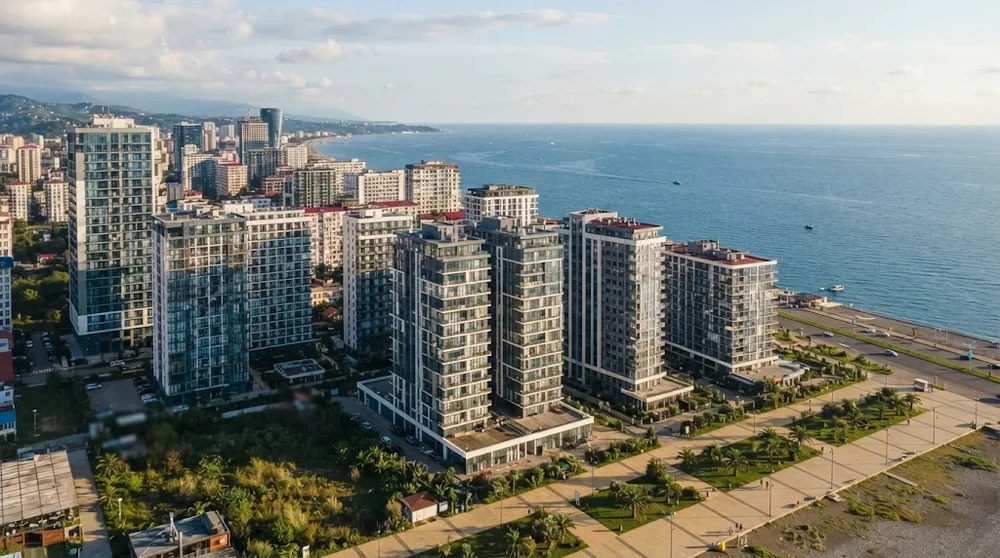
The same sum of money means different things in different transaction settings. A completed resale apartment in Tbilisi, an off-plan unit in Batumi and a coastal project in Gonio or Kvariati each call for a different reading of the payment and a different set of documents. None of the examples below is a market norm, and I cannot give neighbourhood-level averages without independently verified offers.
| Setting | What the payment usually is | Main risk | Where to focus the checks |
|---|---|---|---|
| Tbilisi resale (completed apartment) | Often a holding fee or advance towards a near-term contract | Title defects, mortgages, unregistered co-owners or seller authority | Public Registry extract, cadastral code, seller identity |
| Batumi off-plan (developer unit) | Often a holding fee followed by an initial instalment under a preliminary sale agreement | Construction delay, permit problems, unclear unit identification | Developer’s land rights, permits, plans, payment schedule |
| Gonio or Kvariati coastal project | Varies widely; may be a contractual instalment from the start | Land status, phasing, infrastructure promises not in the contract | Land title, permit stage, what exactly is being sold |
Hypothetical calculation: fixed fee versus percentage
These figures are illustrations, not market averages. Assume a property priced at USD 100,000. A USD 1,000 holding fee represents 1% of the price. A separate 10% initial instalment on the same property would be USD 10,000. If the deal collapses and neither payment is refundable, the buyer’s exposure is ten times higher in the second case. The legal consequences also differ, because a larger contractual payment may be treated as an instalment or as earnest money, depending on the wording.
The Tbilisi resale and the Batumi off-plan case therefore pose different questions. In Tbilisi, you are mainly asking whether the seller can deliver clean title. In Batumi, you are asking whether the developer can deliver a finished, permitted building. In Gonio and Kvariati, you should also ask what the land and permit position is at the date of payment, because the stage of a project can change the nature of what you are buying.
Reservation Fee, Earnest Money or Down Payment?
A holding fee, an advance payment, earnest money and a contractual instalment are four separate legal and commercial concepts, and the document must say which one applies. The word “deposit” is used loosely in sales brochures and by agents, but it does not decide the legal consequences. The wording of the agreement and the facts do.
Holding fee: a commercial payment for taking a unit off the market for a stated period. Whether it is refundable or credited to the price depends entirely on the reservation agreement. Advance payment: money paid towards the price before the contract is performed. Earnest money: a specific security device in the Civil Code of Georgia, in the chapter on additional measures for securing a claim. Contractual instalment: a scheduled part of the price under a preliminary sale agreement or the main contract.
What Articles 421 to 423 say
Under Articles 421–423 of the Georgian Civil Code, as reviewed in November 2026 in an English translation, earnest money is a sum paid by one party to the other as evidence that a contract was made. If it is applied to the payment due, it counts towards that payment; if not, it is returned once the obligation is performed. If the payer is at fault for non-performance, the recipient keeps it, and it is credited against damages. If the recipient is at fault, the recipient must repay twice the amount, and the payer may claim further damages. Please confirm the wording against the current consolidated text on Matsne, because translations lag amendments. You can read the official text in the Civil Code of Georgia on Matsne.
Article 976 sits in the unjust-enrichment chapter of the Code. It may become relevant if money was paid without a valid legal basis and a restitution claim is considered, but whether it applies depends on the specific facts. A lawyer should decide that, and I do not rely on it for a simple refund expectation.
| Payment type | Legal nature | Credited to price? | If the buyer cancels | If the seller cancels |
|---|---|---|---|---|
| Holding fee | Commercial payment under the reservation agreement | Only if the agreement says so | Depends on the clause; often forfeited | Depends on the clause; refund usually needs express wording |
| Advance payment | Payment towards the price before performance | Usually yes, if the contract is performed | Depends on contract terms and the reason for cancellation | Refund is normally expected, but terms matter |
| Earnest money | Statutory security under Articles 421–423 | Yes if applied to the payment; otherwise returned on performance | May be kept by the recipient if the payer is at fault | Twice the amount may be repayable if the recipient is at fault |
| Contractual instalment | Part of the price under the agreement | Yes | Governed by the agreement’s default clauses | Governed by the agreement’s default and refund clauses |
A seller-default illustration
Hypothetical example: a buyer pays USD 10,000 under an agreement that legally qualifies as earnest money. The seller then sells the unit to someone else. If the seller is at fault, Article 423 points towards repayment of twice the sum, meaning USD 20,000. Whether that is actually recovered depends on proof, the court process and the seller’s ability to pay. A holding fee that is not earnest money does not automatically attract this double-repayment rule.
What Should a Georgian Reservation Agreement Include?
A reservation agreement should answer, in writing, who is selling what, how much is being paid, to whom, for how long and what happens to the money in each outcome. Ambiguity on any of these points becomes your problem later. Please treat the components below as a checklist for a lawyer’s review, not as model wording that is universally enforceable in Georgia.
Property and parties
- Full legal name, identification and address of the buyer and the seller, and for a company the registered name, identification code and signatory authority.
- The cadastral code, address, floor and unit designation, area and the stated condition of the property.
- The agreed purchase price and currency.
Amount, currency and recipient
- The exact sum, whether it is a holding fee, advance, earnest money or instalment, and the currency.
- The named recipient and bank account, which should belong to the seller, the developer or an agreed stakeholder.
- The payment deadline and the form of proof of receipt the recipient will issue.
Reservation deadline and exclusivity
- The reservation period with a start date and an end date, plus any extension rules.
- A statement that the seller will not sell, mortgage or reserve the unit to others during the period.
- A due-diligence condition giving you time to check documents before the main contract.
Refund and forfeiture
- Each cancellation trigger: buyer withdrawal, seller default, defective title, missing permits, failed financing and expiry.
- A return deadline in days and a named account for refunds.
- A statement of any deduction, so that “non-refundable” is not left to interpretation.
Here’s the clause I always look for: a sentence stating that the payment is credited in full against the purchase price on signing the main contract, and returned within a fixed number of days if the seller cannot deliver clean title.
Next agreement and price credit
- The date by which the preliminary sale agreement or main contract must be signed, and its agreed core terms.
- How the reservation payment will appear in the final settlement statement.
- The dispute procedure and governing law, reviewed by an independent Georgian lawyer before you sign.
Check this before you sign: if the draft says only “deposit” without naming the type of payment, ask for the legal character in writing. That single word can decide whether a failed deal costs you a small fee or a much larger sum.

When Is a Property Reservation Deposit Refundable?
A reservation deposit is refundable only where the contract says so or where the law gives a remedy, and neither can be assumed. From the deals I’ve handled, the disputes that hurt most rarely turn on the amount. They turn on missing wording about who pays back what, and by when.
| Scenario | Typical contractual position | Statutory earnest-money position | Practical recovery issues |
|---|---|---|---|
| Buyer changes mind | Often forfeited unless the clause says otherwise | Payer at fault may lose qualifying earnest money (Article 423) | Low chance of refund without express wording |
| Seller sells to someone else | Refund should be express; check for penalty clause | Recipient at fault may owe twice the amount | Proof, delay and the seller’s solvency |
| Defective title found | Strong buyer case if a due-diligence clause exists | Depends on whether the defect is the recipient’s fault | Needs registry evidence and a written demand |
| Missing construction permit | Refund trigger only if written into the agreement | Depends on legal classification and fault | Developer’s finances and timing |
| Mortgage or financing refused | Refund only with an explicit finance condition | Usually no statutory protection for an unmet finance hope | Bank refusal letter and deadlines |
| Reservation expires unsigned | Depends on the expiry clause, often credit or return | Depends on whether earnest money secured a contract | Clarify before the date, not after |
Two hypothetical payment-loss calculations
Illustration one: a buyer pays a USD 1,000 holding fee on a USD 100,000 unit. The agreement allows a refund less a USD 200 administration charge if financing fails by a stated date. The refund is USD 800. If the clause were missing, the buyer would have to argue for a refund without contractual support, and might lose all USD 1,000, or 1% of the price.
Illustration two: a buyer pays USD 10,000 as qualifying earnest money and the seller defaults. Twice the amount is USD 20,000, so the gross claim is USD 10,000 above the original payment. If legal and enforcement costs were an assumed USD 3,000, the net outcome would be lower, and recovery would also depend on the seller’s ability to pay. These numbers illustrate arithmetic only, and no recovery is promised.
Evidence matters. Keep the signed agreement, proof of payment, messages about the deadline and any written notice of cancellation, because a claim built on recollection is weak.
How to Pay a Reservation Deposit Safely in Georgia
The safest payment is a traceable bank transfer to a named account belonging to the legal seller or developer, under a signed agreement that says what the money is for. Nothing is risk-free, but a documented route to the right beneficiary removes most avoidable disputes. Bank conditions and transfer methods differ by case, so confirm the details with your own bank and the recipient’s bank.
| Payment channel | Advantages | Risks | What to check |
|---|---|---|---|
| Local bank transfer | Traceable, usually quick, clear record | Wrong beneficiary or account | Account name against the seller or company in the extract |
| International SWIFT transfer | Works from abroad, full bank record | Intermediary fees, delay, compliance questions | Fee instructions, reference text, expected arrival date |
| Currency conversion | Lets you pay in the contract currency | Exchange-rate exposure and spreads | Contract currency, who bears conversion cost |
| Cash | Immediate | Weak proof, higher dispute risk | Signed receipt; prefer to avoid for a deposit |
| Intermediary or agent account | May be convenient | Money sits outside the seller’s account | Written authority and why the account is not the seller’s |
| Documented escrow arrangement | Money is held on agreed conditions | Availability varies by bank and by case | Written escrow terms, release conditions, who is the agent |
Verify the beneficiary before you send a cent. For a company, compare the account name to the entity named in the reservation agreement and in the Public Registry extract. Payment to a personal account of an agent calls for particular scrutiny, and I would not send money there without written authority from the seller and a clear reason. Use a payment reference that names the unit and the agreement date, and keep the transfer confirmation.
Escrow payment is a useful concept, but it is not universally available for ordinary reservations. A documented stakeholder arrangement is something you negotiate and document, and you should not assume a seller or bank offers it. Ask early, in writing, and treat a refusal as information about the transaction rather than as a problem to argue away.

Can Foreign Buyers Reserve Property Remotely?
Yes, a foreign buyer can often reserve property remotely through a private reservation agreement, but the official Public Registry Smart Contract service has eligibility limits that exclude many foreign buyers. The two processes should not be confused. A private remote reservation is a contract between you and the seller. The Smart Contract is a state registration and escrow procedure.
- Request the draft reservation agreement and the seller’s identity documents by email.
- Verify the legal recipient and obtain a recent Public Registry extract for the property before paying.
- Confirm identity checks with the seller, developer or notary as the transaction requires.
- Sign the agreement by a method the parties accept as valid, whether on paper or electronically, and ask a Georgian lawyer whether the chosen form is sufficient.
- If you use a representative, obtain advice on a power of attorney, authentication and its later use for registration.
- Pay by traceable transfer and keep the evidence.
As reviewed in November 2026, the National Agency of Public Registry (NAPR) Smart Contract FAQ states that the service is available to Georgian citizens holding a valid Georgian ID card or passport. It also states that the price is paid in lari through escrow by JSC Bank of Georgia, with both parties holding lari accounts at that bank. The FAQ says the service can be accessed from any country. I therefore do not present it as available to foreign passport holders, and I suggest you do not assume it is.
If you are unsure which documents or powers of attorney your own situation requires, a short one-to-one conversation before you sign anything is cheaper than a correction afterwards.
A private reservation and the final registration of ownership remain separate steps. Registration follows the main contract and the registry procedure, and a signed reservation does not make you the registered owner.
Documents to Check Before Paying the Deposit
You should complete a minimum set of document checks before paying, because a reservation agreement cannot repair a defect that existed before you signed. The mistake I see buyers make most often: paying first because the seller says another buyer is “viewing tomorrow”, then discovering the problem during due diligence.
- Identity and authority: the seller’s passport or company registration, and for a company the signatory’s authority to bind it.
- Recent Public Registry extract: obtain one dated within days, not weeks, and compare the owner’s name with the person or company asking for money.
- Cadastral code and unit details: the code, address, floor, area and unit number should match the draft agreement exactly.
- Mortgages and restrictions: the extract should show whether any charge or restriction is registered.
- Co-owners and consents: confirm who owns the property and whether any other consent is required.
- Developer’s land rights: for off-plan units, confirm who holds the land and on what basis.
- Permits and plans: ask for the construction permit documentation, approved plans and the current construction status.
- Unit identification: make sure the exact unit can be identified in the plans and the contract.
- Draft agreements: request the reservation agreement and the draft preliminary sale agreement or main contract together.
A completed apartment can usually be traced in the registry. An unfinished unit is different, because you are buying contractual rights to a future property, and the exact unit may not yet appear as a separate registered object. When you cannot independently identify the requested unit in the registry, say so in writing, ask the developer how it will be registered, and treat that as a reason to delay payment.
A private reservation does not by itself create registered title or a registered restriction on the property. It also does not automatically stop the seller from transferring or mortgaging it, which is why the exclusivity clause matters. These issues apply across Tbilisi, Batumi, Gonio and Kvariati, although the specific risks differ by project and I make no claims about any named development.

From Reservation to Property Purchase: Next Steps
The sequence below is a typical path, but timing depends on the property and the contract milestones, so I give no universal timetable. Each step has a stop condition, which is a point where you should pause or walk away.
- Shortlist a unit. Compare price, location and completion status.
- Request documents. Ask for the Public Registry extract, cadastral code and draft agreements.
- Run an initial legal review. Stop if the seller cannot show authority or title.
- Negotiate the reservation terms. Fix the amount, period, refund triggers and price credit in writing.
- Make a traceable payment. Pay only to the named recipient and keep the evidence.
- Complete due diligence. Check permits, restrictions and the exact unit.
- Sign the purchase agreement. This may be a preliminary sale agreement for an off-plan unit or the main contract for a completed one.
- Settle the balance. The final statement should deduct the reservation payment, if the agreement provides for crediting.
- Register ownership where legally possible. Registration through the Public Registry is a separate legal step from the reservation.
The reservation payment should appear as a named line in the settlement statement. If the price is USD 100,000 and USD 1,000 was paid as a creditable holding fee, the remaining balance is USD 99,000, before any other agreed adjustments. That arithmetic is an illustration only.
Stop if the seller refuses to put terms in writing, asks for payment to an unrelated account, will not allow a registry check or insists on payment before any due-diligence period. At that point, an independent Georgian lawyer should review the position before you commit more money.
Before You Reserve: A Practical Buyer Checklist
These seven checks decide most reservation outcomes, and they take less time than a dispute.
- You know whether the payment is a holding fee, advance, earnest money or instalment.
- The agreement names the exact unit and the cadastral code.
- The recipient is the legal seller or a documented stakeholder.
- The refund triggers and return deadline are written down.
- The agreement says whether the payment is credited to the price.
- You hold a recent Public Registry extract and the seller’s authority documents.
- An independent Georgian lawyer has reviewed the agreement.
An adviser should identify material risks before a buyer is asked to commit money, and should say plainly when a deal is not ready. If it helps, you can ask me to review a specific property’s documentation, reservation clauses and payment schedule in Tbilisi, Batumi, Gonio or Kvariati. I make no guarantee about the outcome of any purchase.
Property advisory services and independent legal advice are different. As a licensed agent, I can explain the documents, the numbers and the typical clause types. Your own Georgian-qualified lawyer should interpret rights, advise on disputes and act for you if a claim arises.
If you have not yet settled on a unit, budget or location, a short questionnaire can narrow the shortlist before any deposit is discussed.
A clear shortlist makes every later question easier, including how large a reservation payment you are comfortable with.
Frequently Asked Questions About Reservation Deposits
How much deposit do I need to reserve an apartment in Georgia?
There is no legally fixed reservation deposit in Georgia. The amount depends on the seller, developer, property and agreement. Some transactions use a small negotiated holding fee, while others require a larger contractual payment. Ask for the exact sum, reservation duration and refund terms in writing before treating any advertised percentage as standard.
Can I get my reservation deposit back if I change my mind?
Possibly, but repayment depends on the agreement and the legal character of the payment. A non-refundable holding fee may be treated differently from an advance or statutory earnest money. Under Georgian Civil Code Article 423, a buyer who breaches an obligation backed by earnest money may lose that money. Have the relevant clauses reviewed before paying.
What happens if a developer cancels my reservation?
The result depends on the agreement, the reason for cancellation and the payment’s legal classification. If a qualifying earnest-money arrangement is breached through the recipient’s fault, Georgian Civil Code Article 423 provides for repayment of double the earnest money. That rule does not automatically apply to every developer booking fee. Preserve the agreement and payment evidence.
Can I reserve an apartment in Batumi while living abroad?
Remote reservation may be possible when the seller accepts suitable written or electronic arrangements and the payment can be documented. Request the draft agreement, identify the legal recipient and obtain a recent property extract first. Do not confuse a private online reservation with the Georgian Public Registry’s Smart Contract service, which has specific eligibility requirements.
Should I pay a deposit before checking the property documents?
A buyer should normally complete essential checks before transferring reservation money. Confirm the seller’s identity and authority, the property’s cadastral details and any registered restrictions. For an unfinished apartment, examine the developer’s rights and permits. If the seller insists on immediate payment, negotiate a documented due-diligence condition or decline the reservation.
Is a reservation deposit the same as a down payment in Georgia?
No. A reservation fee generally pays for a temporary hold, while a down payment normally forms part of the purchase price under a wider contractual arrangement. Earnest money has a separate legal meaning under Georgian Civil Code Articles 421–423. The contract should identify which payment is being made, who receives it and whether it is credited against the price.
What I Would Do Before Paying a Reservation Deposit
Georgia has no fixed reservation deposit, so the figure you are quoted tells you little until you know what the payment is. I would ask three questions first: what type of payment is this, who receives it, and what happens to it if the deal fails. A holding fee, earnest money under Articles 421–423 and a first instalment are different commitments, and the document should say which one you are making.
My professional assessment, which is opinion and not law, is that a modest holding fee with a written refund path and a due-diligence period is a reasonable way to secure a unit. A large early payment before any registry check is where buyers take avoidable risk. Everything in this article reflects my review in November 2026 and should be checked against current sources for your own transaction.
Disclaimer: This article is general information, not legal, tax or financial advice, and it creates no lawyer–client relationship. Legislation, administrative rules, bank conditions and transaction methods can change and need case-specific confirmation. Hypothetical figures are illustrations, not market averages or promises of any refund, profit or outcome. Please consult an independent Georgian-qualified lawyer before signing or paying.