

A seller or developer has offered to take an apartment off the market for a few days or weeks, provided you send money now. That is the real decision behind every reservation agreement for Georgia property: whether to commit funds before your checks are finished. I’m Vitaly, a property adviser in Tbilisi and a former London corporate-finance analyst, and I read these agreements the way I once read term sheets. The short answer: a reservation can be sensible, but only when the property, the payee and the exit terms are verified first.
A property reservation agreement in Georgia is a contract under which a seller or developer agrees to hold a specified property for a defined period, often in exchange for a payment. It does not transfer ownership. Whether the payment is refundable depends on the agreement and its legal classification. Foreign buyers should verify the property, seller and refund conditions before signing.

What Is a Property Reservation Agreement in Georgia?
A property reservation agreement in Georgia is a private contract in which a seller or developer agrees to hold a named property for a fixed period, normally in return for a payment from the buyer. It is a holding arrangement. It is not a sale, and it does not make the buyer the owner.
Buyers use it to buy time. A foreign buyer who has shortlisted a flat usually needs days or weeks to obtain a registry extract, instruct a lawyer, arrange funds and perhaps plan a viewing trip. Sellers and developers, for their part, want a commitment before they stop showing the unit to others. The reservation agreement trades one for the other.
The document normally obliges the seller to withdraw the property from sale until a stated date and to negotiate, or sign, the next contract with that buyer. The buyer normally commits to pay and to move forward within the deadline. Ownership stays separate: under Article 183 of the Civil Code of Georgia, acquiring immovable property by agreement requires a written transaction and registration of the acquirer’s ownership (as of November 2026).
Names mislead. “Reservation form”, “booking agreement” and “holding deposit” are commercial labels, and a label alone does not decide legal effect. The clauses, and the way the payment is characterised, do.
What does reserving an apartment actually secure?
At most, a reservation secures a contractual promise: the seller will not sell to others during the period and will deal with you first. Take a hypothetical example, not a real transaction. A buyer in London pays USD 2,000 for a 10-day hold on a Tbilisi flat and receives a signed form. If the seller signs with someone else on day four, the buyer holds a contract claim, not a registered right. What the buyer can recover then depends on whether the payment is earnest money, an advance or a holding fee.
Reservation vs Preliminary and Purchase Agreements
Four different instruments get blurred together in Georgian property deals: the reservation agreement, the preliminary sale agreement, the final purchase agreement and pre-registration in the Public Registry. Their purposes and consequences differ sharply. The table below compares them as of November 2026.
| Feature | Reservation agreement | Preliminary sale agreement | Final purchase agreement | Public Registry pre-registration |
|---|---|---|---|---|
| Purpose | Holds a property for a defined period | Commits both sides to conclude the main sale later | Sells the property for a price | Secures the later registration of a right |
| Legal commitments | Only what the clauses say, usually a hold and a payment | Obligation to conclude the main contract (Civil Code, Article 327) | Transfer of the property against payment | A registry entry, not a contract type |
| Effect on ownership | None | None; the buyer is not yet the owner | Ownership arises only on registration (Article 183) | Not ownership; protects a future registration |
| Registry implication | None by itself | None by itself; may support pre-registration if legal conditions are met | Application to register the buyer’s right | Entry in the Registry of Immovable Property Rights |
| Next action | Complete checks, then sign the next contract | Sign the final contract on the agreed terms | Register, pay the balance, take handover | Obtain a legal assessment of eligibility, then register the secured right |
Article 327 of the Civil Code of Georgia deals with preliminary contracts, and its third paragraph creates an obligation to conclude the principal contract (as of November 2026). Georgian academic commentary adds that a court can substitute for a defaulting party’s consent only where the essential terms were already agreed, so a vague document may be weaker than it looks. The form requirements for a preliminary agreement about immovable property should be confirmed by a Georgian lawyer before you rely on it.
Article 183 marks the endpoint. A preliminary sale agreement can bind a seller harder than a one-page holding form, yet it still leaves the buyer unregistered. A stronger contractual commitment is not the same as registered ownership.
Does a reservation give the buyer ownership or priority?
No. A reservation does not give ownership, and a private reservation does not automatically create registered priority. Pre-registration under the Law on Public Registry is a separate statutory step with its own conditions, which I cover later in this guide.
How Much Is a Reservation Deposit in Georgia?
Georgian law does not set one mandatory reservation-deposit percentage or one standard holding period. The Civil Code, the Law on Public Registry and the National Agency of Public Registry (NAPR) guidance I reviewed contain no such figure (as of November 2026). Amounts and durations are negotiated commercial practice. I found no official data on typical levels, so I do not quote an average.
Three kinds of payment should be kept apart. A negotiated reservation payment goes to the seller or developer. A purchase-price instalment is part of the price under a sale contract. An administrative fee goes to the state, for example NAPR’s fee for registering a right. The first two are private commercial matters; only the third is a government charge.
Articles 421–423 of the Civil Code regulate earnest money (ბე), a sum paid when a contract is concluded to evidence it and secure its performance. As I read Article 423 (as of November 2026), an earnest-money recipient at fault for non-performance must return double the amount, and a giver at fault can lose it. Whether your payment qualifies depends on the contract’s wording and the transaction’s legal nature. The table uses a hypothetical USD 100,000 apartment and a USD 2,000 payment. These figures illustrate the mechanics; they are not a market average or a legal requirement.
| Payment type | Sale completes | Buyer withdraws without lawful reason | Seller defaults or withdraws |
|---|---|---|---|
| Earnest money (ბე) | Normally counted towards the price; balance USD 98,000 | Buyer at fault can lose the USD 2,000 (Article 423) | Seller at fault must return double, USD 4,000 in total, plus possible further damages |
| Advance payment | Credited to the price; balance USD 98,000 | Starting point is a prepayment, not a penalty; seller keeps money only if the contract allows or loss is shown | Repayment of USD 2,000, plus possible damages under general contract rules |
| Holding fee | Depends on the clause: balance USD 98,000 if credited, USD 100,000 if not | Often retained if the contract says it is non-refundable | Refund depends on the clause; no automatic doubling |
Also ask three questions before paying. Does the payment count towards the price? Is it paid to the owner, the developer or an agent? Does the agent hold written authority to receive it?
Is a reservation fee the same as earnest money?
Not necessarily. A reservation fee, an advance, earnest money and a holding fee are separate concepts, and the document’s label does not conclusively fix which one applies. Ask the seller to state the classification expressly in the agreement.
What Must a Reservation Agreement Include?
I read a reservation agreement as a checklist of risks, one clause at a time. The list below shows the clause concepts I expect to see (as a review guide, not a universal template). A proposed clause is not an enforceable guarantee until both sides have signed it and the law permits it.
- Parties: full names and identification or company registration details of buyer and seller.
- Authority: evidence that the signatory may bind the seller, such as a company extract or power of attorney.
- Property: cadastral code, address, building, floor, area and plan reference; for a future unit, the unit number and approved plan.
- Price and currency: the full price, with the reservation amount stated separately.
- Payment classification: earnest money (ბე), advance or holding fee, named expressly.
- Beneficiary: account holder, bank and IBAN, matching the seller or developer.
- Period: start date, expiry date and time.
- Exclusivity: the seller will not offer, sell, mortgage or encumber the property during the period.
- Next contract: its type, target date, drafter and the main terms already agreed.
- Due-diligence condition: a right to withdraw and be repaid if checks reveal a defect.
- Financing condition: repayment if a needed mortgage is refused.
- Refund mechanics: triggers, repayment deadline, method and currency.
- Seller default and permitted cancellation: who may cancel, on what notice and with what consequences.
- Costs: who pays extract, registration, notary and translation costs.
- Law, forum and language: governing law, jurisdiction and which text prevails.
- Signatures and receipt: dated signatures and acknowledgement of the amount received.
The refund clause
Here’s the clause I always look for. The wording below is an illustrative concept, not a verified template:
If the buyer’s checks reveal a defect in title, an undisclosed encumbrance or a material mismatch with the described property, the seller repays the full reservation payment to the buyer’s account within seven banking days of written notice.
The property-identification clause
An illustrative concept: the reserved unit is identified by cadastral code, floor, area and an attached plan and specification, and those attachments form part of the agreement. A description such as “sea-view two-bed” is not an identifier.
The deadline and seller-default clauses
An illustrative concept: the reservation expires at a stated time on a stated date, and extension requires a signed written amendment. If the seller sells, mortgages or offers the unit during the period, the seller repays the payment within a fixed number of days and compensates documented costs. Whether such a clause is enforceable depends on its wording and on Georgian law.

How to Check a Property Before Reserving It
Check this before you sign — here’s why: a reservation payment is easiest to protect before it leaves your account. The sequence below is the minimum I would complete before any payment (professional assessment, not a legal rule).
Documents to request from the seller
- A current NAPR extract for the property, issued within days of signing, showing the registered owner, cadastral code, area and registered mortgages or other burdens.
- A match between the cadastral code, address, floor and area in the extract and those in the contract and plans.
- Seller identification: passport for an individual; for a company, a registry extract and proof that the signatory has authority.
- Confirmation of co-ownership and of any consent needed from other owners.
- A check of mortgages, attachments and third-party rights such as leases, with the lender’s consent where the property is mortgaged.
- A comparison of marketing material and plans with the legal property as registered.
- Outstanding questions put to an independent Georgian lawyer.
| Document | What it proves | What it does not prove |
|---|---|---|
| NAPR extract | What was registered at the date of issue | Physical condition, actual possession, unregistered claims or later changes |
| Cadastral code and plan | Which registered object is meant | That the unit on offer matches the flat you viewed |
| Seller ID or company extract | Who the person or company is | That the signatory may sell this property |
| Power of attorney | That authority was granted, if valid | That it covers a reservation, or has not been revoked |
| Marketing brochure | What the seller promotes | Anything legally binding, unless attached to the contract |
Additional checks for off-plan apartments
A proposed future unit, an existing registered apartment and an interest in a larger property can be different legal objects. A clean extract for the land does not prove that your unit exists, has permission to be built or will be registered separately. For an off-plan purchase, ask for the developer’s company details, title to the underlying land, construction permission and its status, the approved plans, a unit-level specification and the construction milestones. For land-based projects, ask for the land category: as of November 2026, foreign individuals face restrictions on acquiring agricultural land under the Organic Law on Agricultural Land Ownership, with limited exceptions, so a lawyer should confirm the position before any payment.

How to Reserve Property in Georgia Step by Step
The procedure below assumes a straightforward purchase. Individual transactions vary, so treat it as a framework to adapt with your lawyer.
- Choose the property and note its cadastral code or unit number.
- Verify the seller and obtain the documents listed above.
- Negotiate the price, holding period, payment classification and exit terms in writing.
- Commission a contract review before signing, including translation checks.
- Agree contingency clauses for due diligence, financing and seller default.
- Confirm the beneficiary account through a channel independent of the email that supplied it.
- Sign using the method your lawyer has confirmed.
- Pay the agreed amount with a clear payment reference, and keep the bank confirmation.
- Retain the signed copy, receipt and all written messages.
- Complete the checks inside the reservation period.
- Move to the correct main contract and the registration of your right.
Reserving from abroad
A remote reservation can work, but each step adds risk. Verify identity and signing authority on both sides. Insist on a reliable translation, and check that the Georgian and English texts say the same thing. Do not assume that email, an electronic signature, a video call or a foreign notarised document always suffices; the formalities depend on the document and must be verified for your transaction. If someone signs for you, a power of attorney must meet Georgian requirements. Bank compliance checks, currency conversion and international transfers can delay or return a payment, so allow for that inside the deadline and ask the seller to confirm receipt in writing.
What happens after the reservation period?
The reservation period is a contractual window, not a legal process. Before it ends, either sign the next agreement, agree a signed extension or let the reservation lapse under its own terms. Registration of a right is filed through a Public Service Hall, a NAPR office or an authorised user (as of November 2026). A NAPR smart-contract session reservation is an appointment-booking process for that registration, not a reservation of a property from a seller.
Professional assessment: bank delays are the most predictable cause of a missed reservation deadline for overseas buyers. Build a few banking days of slack into the agreement.

When Is a Reservation Deposit Refundable?
The short answer: sometimes. The longer answer: refundability depends on whether the payment is statutory earnest money or a contractually defined payment, and on who is at fault. No deposit is automatically refundable, and none is automatically forfeited. The matrix below assumes the contract is silent unless stated, and it describes general principles, not predictions (as of November 2026).
| Scenario | If the payment is earnest money (ბე) | If it is an advance or holding fee | Evidence to keep |
|---|---|---|---|
| Sale completes | Normally counted towards the price | Credited or not, per the clause | Receipt and final contract |
| Buyer withdraws without cause | Buyer at fault can lose it | Per the contract; may be non-refundable | Signed agreement, withdrawal notice |
| Seller withdraws | Recipient at fault must return double (Article 423) | Refund and damages under contract terms | Seller’s notice, payment proof |
| Legal defect found | Turns on who is at fault for non-performance | Refund trigger should be in the clause | Extract, lawyer’s written findings |
| Financing fails | No automatic refund without a financing clause | Per the financing clause | Bank refusal letter, dates |
| Undisclosed mortgage | Seller likely at fault if the property was misdescribed | Refund trigger should cover this | New extract showing the mortgage |
| Deadline expires | Depends on who failed to proceed | Per expiry and extension terms | Dated correspondence |
| Mutual cancellation | As agreed in writing | As agreed in writing | Signed cancellation document |
What if the buyer changes their mind?
Without a contractual exit, withdrawal puts the payment at risk, and earnest money is the most exposed. A refund right must be written down before you pay.
What if the seller cancels?
Ordinary contractual remedies apply to most payments. The doubling consequence in Article 423 belongs to earnest money, and I would not assume it for a holding fee.
What if legal checks reveal a problem?
A materially different property, an undisclosed mortgage or an incorrect cadastral code is a reason to stop and write to the seller. Without a due-diligence clause, the outcome is a legal dispute rather than a simple refund.
To request repayment, send a written notice quoting the clause, the amount, the date and bank details, and set a deadline. Keep the signed agreement, payment confirmation, extract and all messages. Seek legal advice before relying on an automatic remedy.
The mistake I see buyers make most often is treating a verbal promise of a refund as a refund. Opinion, not law: if it is not in the signed text, plan as if it does not exist.
Does a Reservation Protect Against Double Selling?
A private reservation does not automatically register a property right in Georgia, so it does not by itself stop a seller from signing with someone else. It creates a contractual promise. If the seller breaks it, the buyer’s remedy is usually repayment or damages, not the apartment. A registered right is different, because the Public Registry entry is what the registry itself relies on.
Article 12 of the Law on Public Registry provides for pre-registration of immovable-property rights (consolidated text checked in November 2026). A right may be pre-registered in the Registry of Immovable Property Rights to secure its later registration, on the basis of an agreement signed between the parties. While the entry stands, no other right to the property can be registered, and no abandonment of ownership, unless the parties agree otherwise. Registering a legal successor as owner is not barred. The entry ends on registration of the secured right, on expiry of any time limit, by written agreement or on other grounds in the article. Pre-registration of agricultural land rights follows the Organic Law on Agricultural Land Ownership.
If you are unsure whether your reservation could be pre-registered, or how your payment would be classified, a short one-to-one conversation before signing can prevent an expensive misunderstanding.
Whatever route you take, ask for a fresh extract showing the entry itself. A promise to register is not a registration, and the extract is the document that tells you which one you have.
When should buyers consider pre-registration?
Consider it when the sum is significant, the hold is long or the unit is in demand. Several practical limits apply. The registration object must be properly identified, the seller must cooperate and sign an eligible agreement, and the duration and any time limit must be understood. Not every reservation, and not every future apartment, qualifies automatically. Whether your particular arrangement can be pre-registered needs an individual assessment by a Georgian legal specialist. Even a valid entry does not guarantee that the sale will complete.
Reservation Risks in Tbilisi, Batumi and Gonio
The contractual risk changes with the type of transaction more than with the city. The scenarios below are illustrative; I do not cite local statistics because I have none verified, and practice varies by seller.
| Item | Completed resale flat, Tbilisi | Developer apartment under construction, Batumi | Proposed development, Gonio or Kvariati |
|---|---|---|---|
| Key documents | Current extract, seller ID, mortgage status | Developer company extract, land title, permit, plans, sale contract draft | Land category and title, permit status, master plan, unit specification |
| Principal risks | Hidden mortgage, co-owner, wrong cadastral code | Delay, specification drift, unit not yet separately registered | No permit yet, land restrictions, changing plans, unclear legal object |
| Contract safeguards | Refund triggers, clean-title condition, exclusivity | Unit-level specification, dated milestones, delay remedies, registration obligation | Permit as a condition, no payments beyond the reservation until land and permit are verified |
Completed resale apartments
A registered resale flat is the easiest object to verify, because the extract describes a real, registered unit. The main risks are the ones the extract reveals or misses: mortgages, co-owners and seller authority.
Off-plan developments on the coast
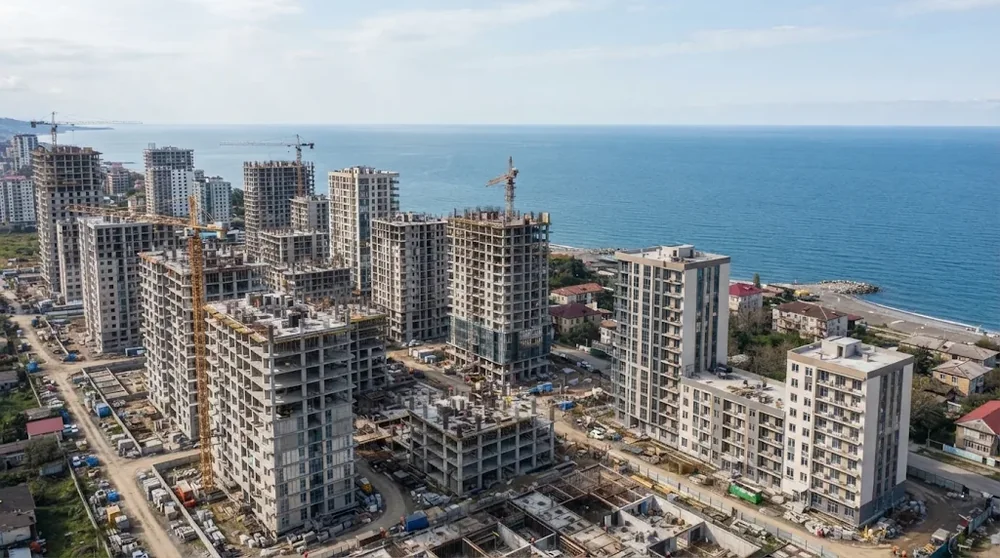
Developer sales add questions about authority and delivery. Check the developer’s identity, its rights to the underlying land, the construction permission, the unit’s specification, the completion date and, separately, the date by which your ownership will be registered. Completion of a building and registration of your title are different milestones. A brochure or a sea-view promise is not a contractual description unless it is attached to the agreement.
Common Reservation Agreement Mistakes to Avoid
Most reservation problems are avoidable. Each mistake below is paired with the corrective action.
- Paying before checking title. Obtain a current extract first.
- Relying on verbal refund promises. Get every exit condition in the signed text.
- Paying an unverified intermediary or wrong beneficiary. Confirm the account holder independently.
- Leaving the expiry unclear. State a date, a time and the extension method.
- Omitting a financing contingency. Add a repayment trigger if a needed mortgage is refused.
- Accepting unsigned amendments. Treat only signed written changes as binding.
- Using an inaccurate unit description. Insert cadastral code, floor, area and plan.
- Signing inconsistent Georgian and English texts. Have both compared and say which prevails.
- Treating seller promises as registry protection. Check whether an entry was actually made.
Red flags that should stop a payment
Stop if the seller refuses an extract, the bank account name differs from the seller, the pressure to pay is urgent or the refund terms exist only verbally.
A practical decision test, offered as my professional opinion: proceed if the extract, seller and refund clause all check out; request amendments if any one is weak; and do not pay until reviewed if the seller will not put the terms in writing.
Reservation Costs, Registration Fees and Timelines
The table separates the negotiated reservation payment from official fees and professional costs, as checked in November 2026. NAPR figures are not reservation-deposit fees, and they may not describe the processing of every reservation document.
| Item | Who charges | Amount (as of November 2026) | Note |
|---|---|---|---|
| Reservation payment | Seller or developer | No statutory amount | Negotiated; USD 2,000 above is only an illustration |
| Registry extract | NAPR | About GEL 13 to 20 next working day; GEL 52 to 75 same day | Depends on filing method; confirm the category and any English-language surcharge |
| Registration of a property right | NAPR | GEL 150 in 4 working days; GEL 270 in 1 working day; GEL 350 same day | Applies to registering a right, not to a reservation |
| Signature confirmation | NAPR | GEL 7 | Listed for documents submitted for registration |
| Legal review, translation, notary | Providers | Quoted individually | Ask for written quotes |
The fees come from the NAPR fee schedule for immovable property. A hypothetical breakdown: a reservation payment negotiated between the parties, a registry extract costing a few lari, standard registration at GEL 150 if the buyer chooses the four-working-day service, and separate fees for review and translation.
Three timelines are different concepts. The contractual reservation period is set by the agreement. Professional drafting and review time depends on the case. Government processing is set by the service period chosen at NAPR. Contract preparation and bank processing times are case-dependent.
Frequently Asked Questions About Reservation Agreements
Is a reservation agreement legally binding in Georgia?
A reservation agreement can create enforceable contractual obligations in Georgia, but its effect depends on its terms, its form and the applicable law. It does not automatically transfer ownership or create a registered property right. Buyers should check what exactly the seller promises, what happens if either side withdraws, and whether further legal protection is needed.
Can I get my reservation deposit back if I change my mind?
Possibly, but no universal refund rule covers every payment called a reservation deposit. The outcome depends on the agreement, the legal character of the money and the reason for cancelling. Articles 421–423 of the Civil Code apply to earnest money, and a buyer who withdraws may lose it. Other payments follow their own terms, so obtain refund conditions in writing before paying.
How much should I pay to reserve an apartment in Georgia?
Georgian law does not set one mandatory reservation-deposit percentage for every purchase, so the amount is negotiated with the seller or developer. Weigh it against the price, the length of the hold and the chance of losing it. Ask whether it is credited towards the price, and pay nothing until the seller and the property have been checked.
What happens if the seller cancels the reservation?
The result depends on the seller’s obligations and on how your payment is classified. Under Article 423 of the Civil Code, an earnest-money recipient at fault for non-performance must return double the amount, with possible further damages. That rule should not be assumed for every holding fee or advance. Keep the signed agreement, payment evidence and all written messages.
Can I sign a property reservation agreement from abroad?
A foreign buyer can potentially arrange a reservation without travelling, if the parties use a suitable signing method and meet the relevant formalities. Check the signatory’s authority, the translation, the payment beneficiary and the requirements for the next contract. A remote reservation is not ownership registration. Ask a Georgian lawyer to confirm the procedure for your transaction.
Does reserving an apartment stop the developer from selling it to someone else?
A reservation agreement may oblige the developer not to offer the apartment to others, but a private promise does not automatically create a registered restriction. Article 12 of the Law on Public Registry allows pre-registration of certain immovable-property rights under stated conditions. Buyers should check whether it is available, whether an entry has actually been made, and what protection it gives.
What to Do Before Signing a Reservation
- Obtain a current NAPR extract and match the cadastral code to the contract.
- Check the seller’s identity and authority.
- Ask which category the payment falls into: earnest money, advance or holding fee.
- Negotiate written exit conditions covering defects, financing and seller default.
- Verify the payment recipient independently.
- Have an independent Georgian property lawyer review unresolved risks.
If you want a second pair of eyes, you can request a contract and registry-extract review before any reservation payment leaves your account. I will tell you what the documents show, what they leave open and which points to raise with the seller. I cannot promise approval, a refund or a successful transaction.
Bottom Line: Check First, Pay Last
A reservation agreement in Georgia is a contractual hold, not ownership. Ownership of immovable property arises only through a written transaction and registration (Civil Code, Article 183). Whether your money comes back depends on its classification under Articles 421–423 or on the contract, and a private reservation is distinct from pre-registration under Article 12 of the Law on Public Registry. Georgian law sets no mandatory deposit percentage, so the numbers are yours to negotiate (as of November 2026).
I moved to Tbilisi about eight years ago because I prefer to understand a market through both numbers and direct experience. My view, which is an opinion and not legal advice, is that the best reservation agreement is a dull one: verified seller, identified property, a dated deadline and a refund clause you can read without a lawyer’s help.
If you are still shortlisting and want options that fit your budget, location and investment goals before any reservation is on the table, a short questionnaire narrows the field.
Whichever property you choose, the sequence stays the same: extract first, contract review second, payment last. That order protects both your money and your negotiating position.
Disclaimer: This article provides general information as of November 2026 and is not personalised legal or financial advice. Georgian law, NAPR fees and procedures can change, and facts differ between transactions. Nothing here guarantees a refund, a registration or any outcome, and every purchase carries risk. Consult a qualified Georgian lawyer before sending money.