Batumi property developer red flags are easiest to spot before a deposit leaves your account, because the documents that expose them are either public or can be requested in writing. I am Vitaly, a former London corporate-finance analyst, and I assess a developer the way I once assessed a borrower: ownership, authority, cash and enforceability first, brochure last. Off-plan buying in Batumi, and in coastal areas such as Gonio and Kvariati, can work where the paperwork supports the sales pitch. This guide sets out ten warning signs, the evidence that reveals each and a proportionate response.
The biggest red flags when choosing a Batumi property developer are unclear land ownership, missing construction permits, hidden mortgages, unverifiable project history, stalled construction, weak finances, unsafe payment requests, vague contracts, unrealistic rental guarantees and uncertain ownership registration. Before paying a deposit, independently verify the developer, land, permits, construction progress and contractual protections.
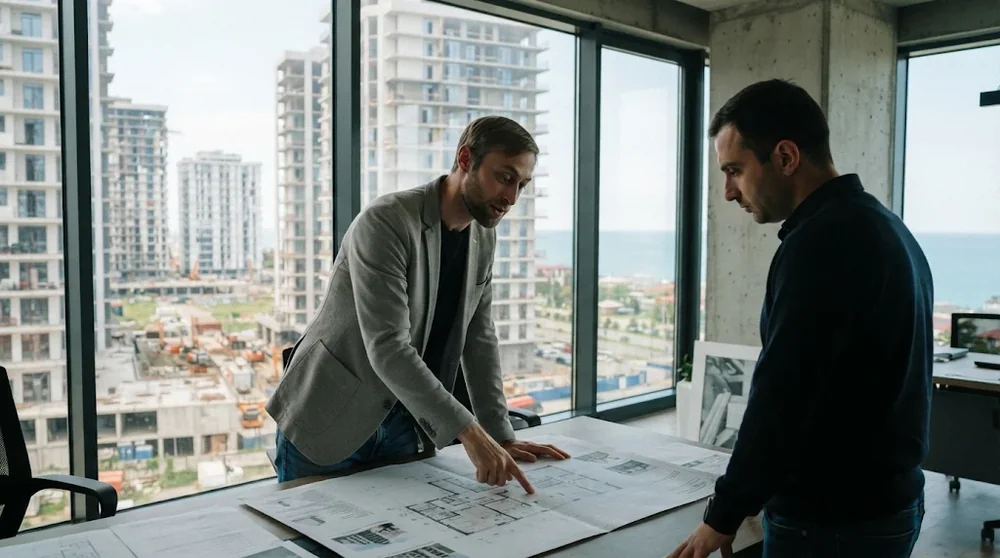
Batumi Property Developer Red Flags: At a Glance
A red flag is a documented warning sign that calls for verification, and only some of them justify walking away. The search intent behind this topic is verification before signing or paying, so the ten items below are ordered as a buyer would meet them: who sells, what land, what permit, what track record, what funding, what payment, what contract, what registration, what income and what building.
- Unclear developer identity or project-company authority.
- Unverifiable land title or encumbrances.
- Missing or inconsistent construction permit.
- Poor delivery history or hidden disputes.
- Stalled construction and weak financial evidence.
- Unsafe deposit and payment arrangements.
- Vague deadlines, specifications and refund clauses.
- Unclear buyer rights and ownership registration.
- Unrealistic guaranteed rental income.
- Poor construction quality and uncertain commissioning.
I use three practical categories, which are editorial labels and not legal classifications. Stop means a confirmed defect that blocks a safe purchase. Investigate means a question that evidence can still resolve. Manage means a normal commercial risk that contract terms and price can address. A missing document is an Investigate item until the developer fails to produce it, and then it becomes a decision.
| Red flag | Evidence to request | Severity | Recommended action |
|---|---|---|---|
| 1. Unclear developer identity | Registry of Entrepreneurs extract, signatory authority | Investigate | Name the exact entity that owes you the apartment before any payment. |
| 2. Unexplained land title or encumbrances | Current Public Registry extract, cadastral code | Stop if a seizure or unexplained owner appears; otherwise Investigate | Match owner to seller; review every mortgage and restriction with a lawyer. |
| 3. Permit does not match the project | Construction permit, approved drawings | Stop if the unit is outside the approved scheme | Compare storeys, use and phase with the advertised unit. |
| 4. Delivery problems in earlier projects | Completed-project list, handover records, court and public records | Investigate | Visit a finished building and speak to residents or managers. |
| 5. Stalled construction, unclear funding | Dated site evidence, construction programme, financing explanation | Investigate | Commission an engineer’s report before any large instalment. |
| 6. Unsafe payment requests | Contract beneficiary, invoice, bank details | Stop if payment goes to an unexplained third party | Pay only to the verified contracting entity against a receipt. |
| 7. Vague contract remedies | Full draft agreement, specification | Manage or Investigate | Negotiate dates, refunds, area tolerance and dispute terms in writing. |
| 8. Uncertain ownership registration | Registration mechanism in writing | Investigate | Ask which right is registered, when and at whose cost. |
| 9. Rental returns too good to verify | Operator agreement, fee schedule, guarantor identity | Manage | Rebuild the yield net of all costs; ignore unsupported projections. |
| 10. Quality and commissioning unclear | Engineer’s inspection, completion documents | Investigate | Inspect earlier buildings; require a written defect-remedy procedure. |
Treat the table as a workflow. Request the evidence, record who verified it, note any discrepancy and assign one of the three categories. Section 14 turns that record into a decision.
Red Flag 1: The Developer’s Identity Is Unclear
The legal entity that signs your contract and receives your money is the only party that owes you an apartment, and a famous brand name does not change that. Identity checks therefore start with the exact Georgian company, not the logo on the sales brochure.
How to check a developer’s company registration
The Registry of Entrepreneurs, administered by the National Agency of Public Registry (NAPR), holds the public record of Georgian companies. Search the contracting company by name or identification code and obtain an extract. It normally shows the legal form, registered address, partners or shareholders, directors and persons authorised to represent the company, plus registered changes. Compare these details with the draft contract, the invoice and the signatory’s identity document.
Separate six names that often get blurred: the commercial brand, the developer group, the project company, the landowner, the person who signs and the bank account holder. In a clean transaction these line up or are linked by documents you have seen. In a weak one, the brand sells, an unrelated company signs and a third party collects the money.
Why the project company matters
Developers often build each project through a separate company, and a recognised group may sell through a recently incorporated entity. That is not automatically improper. It does mean that the group’s reputation is not your counterparty, so you need stronger evidence of the project company’s rights to the land, its authority to sell and any parent guarantee, which should exist as a signed document and not as a verbal comfort.
The question to put to the seller in writing is: which legal entity actually owes me the apartment? Then check that the director or attorney signing has documented authority. A power of attorney should be specific, current and consistent with the registry entry.
Red Flag 2: Land Ownership or Mortgages Cannot Be Explained
A Public Registry extract for the plot shows who owns it and what claims sit on it, so a developer who cannot explain that extract has not established the right to sell you anything. This is the check I treat as non-negotiable.
How to read a land registry extract
Ask for the cadastral code of the plot and request the current extract yourself, rather than relying on a copy supplied by the seller. Read four things: the registered owner, the property description and area, any mortgage, and any other recorded restriction such as a seizure, lease or easement. Then compare the owner with the company on the contract.
If the owner and the seller differ, the seller needs documents proving development rights, such as a lease, a joint-activity arrangement or a registered right to build and sell. Check the term, the scope and who may sell units. A development right that expires before completion is a defect, not a technicality.
The NAPR published schedule consulted for November 2026 lists a standard extract at 20 GEL (13 GEL if requested electronically) with one-working-day service, and same-day service at 75 GEL (52 GEL online). An English-language extract may attract an additional 26 GEL. These are document-preparation charges, not property registration fees, and the precise service should be confirmed before you rely on any figure. Fee checked as of November 2026.
When a bank mortgage is a serious risk
A development-finance mortgage is common and is not evidence of fraud. The risk lies in whether you hold a legally effective arrangement for releasing your unit from that mortgage once you have paid. Ask for the lender’s written consent to sales, the release procedure for individual units and the payment flow that triggers release. A mortgage with no credible unit-release mechanism needs specialist review before any deposit; a recorded seizure or attachment is a Stop item until a lawyer confirms in writing that it does not affect your purchase.

Red Flag 3: The Construction Permit Does Not Match the Project
A construction permit authorises a defined building on a defined plot, and the unit you are offered must fall inside that authorisation. Georgia’s framework is the Code of Georgia on Spatial Planning, Architectural and Construction Activities, and you should have your lawyer confirm the consolidated text in force as of November 2026, because procedures differ by building class.
Where to verify a Batumi construction permit
Ask the developer for the permit number, the issuing municipal authority, the approved drawings and any later amendments. Then confirm them with the relevant municipal permitting service and any official permit records available. Compare the cadastral identification, permitted use, building height, number of storeys and the phase that contains your unit.
A sales brochure, planning concept or preliminary approval is not equivalent to a valid construction permit. Permission to build is also a different milestone from commissioning, which concerns the finished building and is covered under Red Flag 10.
What if the marketed floor is not approved?
Consider a hypothetical example, not a real case. A brochure offers an apartment on the 24th floor, while the approved drawings show 20 storeys. The seller explains that an amendment is pending. Until the amendment is issued and matches the unit, you would be paying for space that has no approved basis. Under my Stop and Investigate categories, this is a Stop item for payment purposes and an Investigate item for the project generally: ask for the amendment application, the decision and the revised drawings, and consider waiting until they exist.
Red Flag 4: Previous Projects Reveal Delivery Problems
A developer’s completed buildings are the only verifiable evidence of how it delivers, so a thin or untraceable record is a finding in its own right. A lack of history is not proof of dishonesty, but it means the buyer carries more uncertainty.
How to check a developer’s track record
- List every completed project the developer claims and identify the legal entity behind each one, since the brand may have used different project companies.
- Compare promised and actual delivery dates, using handover records or residents’ accounts.
- Visit at least one finished building and look at common areas, lifts, drainage and façade condition.
- Speak with residents or an independent property manager where feasible.
- Search available court records and public notices for the developer and the relevant project companies.
- Classify what you find: a confirmed judgment, a pending proceeding or an unverified online complaint.
Those categories matter. A lawsuit does not by itself establish misconduct, since construction disputes arise in well-run projects too. A confirmed judgment on a delivery failure carries more weight than a pending claim, and an anonymous review carries the least.
What previous buyers can tell you
Residents can tell you whether keys arrived on the contractual date, whether the specification matched the contract and how the developer handled defects. Ask open questions and note the dates. If the group is selling through a new project company, previous buyers also show whether the group stood behind earlier entities in practice.
Red Flag 5: Construction Has Stalled or Funding Is Unclear
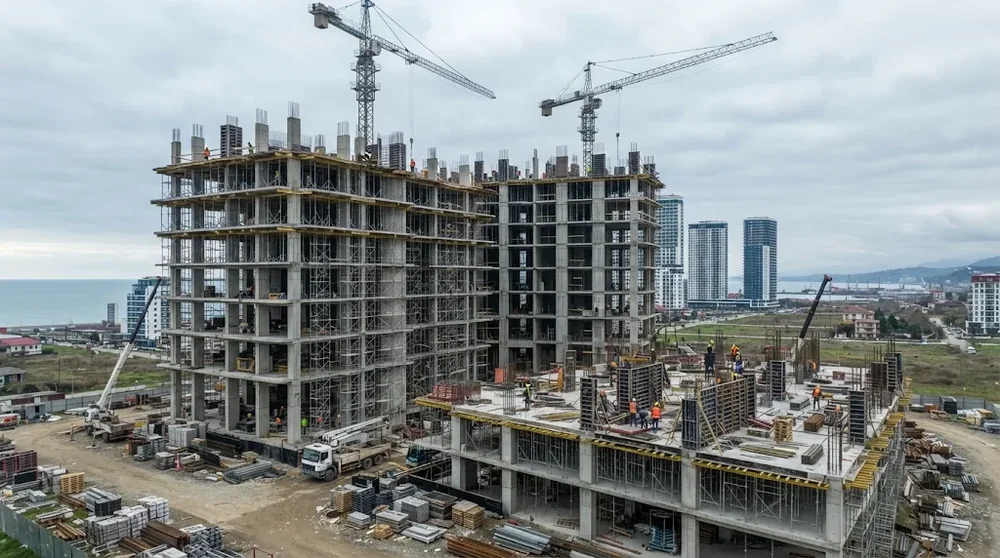
Stalled construction is an observable condition, whereas insolvency is a legal and financial conclusion, and photographs can establish only the first. Keep those two apart, because a slow site may reflect weather, permitting or contractor changes, while a silent one with shifting schedules deserves harder questions.
- Indicators of a stall: unchanged structural progress between dated visits, an inactive site, inconsistent progress photographs, postponed contractor work and repeated changes to the delivery date.
- Documents to request: a construction programme, dated progress evidence, the contractor’s identity and the status of outstanding milestones.
- Questions to ask about funding: how much of the build is financed from buyer instalments, whether a lender is involved and what happens to the programme if sales slow.
- Payment control: instalments tied to verifiable construction milestones reduce exposure compared with large payments in advance.
How to verify construction progress remotely
Remote buyers should preserve evidence. Ask for dated video of the site from a fixed vantage point, compare it against the programme and have an independent local engineer visit before any major payment, with a written report listing what was seen, on which date and against which milestone. Do not rely on the developer’s own photographs as the only record.
Which financing questions should buyers ask?
Georgia has no universal rule that every off-plan purchase must use escrow or completion insurance that I can confirm from the primary legislation, and I do not assume their absence either. If a seller proposes an escrow or insurance product, verify the specific institution, the terms and the release conditions for your transaction in writing.
Red Flag 6: The Developer Demands Unsafe Payments
A payment request is safe only when the beneficiary, the invoice issuer and the contracting company are the same verified entity. Any mismatch between those three is a reason to stop and clarify before transferring funds.
Where should a property deposit be paid?
- Pay only to a bank account in the name of the contracting company you verified in the Registry of Entrepreneurs.
- Treat a request to pay into a personal account, an unrelated company or an unverified account as a Stop item until explained and documented.
- Define each payment in operational terms: a booking deposit, an instalment, a milestone payment. The legal character of each depends on the signed documents, so have a lawyer read them.
- Write the refund conditions into the contract before paying, and keep the bank receipt with the invoice.
- Pay a deposit only after you have received and checked the land extract and the permit.
Take an example. A salesperson asks for a deposit within 48 hours to hold a unit, before you have seen the land extract or permit. The price pressure is the signal. A legitimate seller can wait for you to check a public record.
How to verify the payment recipient
Compare four names: the contract party, the invoice issuer, the bank’s beneficiary name and the registry entry. If payment instructions change mid-transaction, confirm the change by calling a number you already hold from the contract, not one given in the new email. Reconcile every transfer against the schedule and keep receipts. Mistake I see buyers make most often: sending money on the strength of an email.
Red Flag 7: The Contract Offers No Meaningful Remedies
A purchase contract protects a buyer only to the extent that it defines the apartment, the deadlines, the specification and the consequences of failure. The table below presents drafting objectives, not mandatory legal wording, and enforceability depends on Georgian law and the particular agreement.
The clauses worth negotiating before signing
| Clause | Weak wording | Better drafting objective | Buyer risk |
|---|---|---|---|
| Apartment identification | ‘An apartment on the 5th floor’ | Unit number, floor, plan reference and cadastral reference where available | Dispute over which unit was bought |
| Net and gross area | ‘Approximately 45 sq m’ | State which area is sold and how it is measured | Paying for space not delivered |
| Area tolerance and adjustment | No adjustment mentioned | Defined tolerance with a price adjustment in both directions | One-sided price changes |
| Finish specification | ‘High-quality finish’ | List of materials and fittings; black-frame or white-frame defined | Disagreement over what ‘finished’ means |
| Payment schedule | Dates only | Instalments linked to construction milestones | Paying ahead of progress |
| Completion date | ‘Around Q4’ | Fixed or objectively determinable date | No point at which delay begins |
| Completion versus handover | Used interchangeably | Separate definitions for physical completion, commissioning and handover | Unclear when obligations are met |
| Delay consequences | No penalty | Defined remedy for delay, with the amount considered against applicable law | No leverage if delayed |
| Termination and refund timing | Refund ‘in due course’ | Stated triggers and a stated refund period | Open-ended wait for money |
| Developer changes | Right to alter any plan | Changes limited to minor ones; material changes need consent | A different building from the one sold |
| Assignment | Silent | Rules for resale by you and transfer by the developer | Unwanted counterparty |
| Dispute resolution and language | Undefined forum | Named forum and a priority language | Uncertainty over which text governs |
Here’s the clause I always look for: a termination clause that names the events entitling the buyer to a refund and the number of days within which the money is returned.
What happens when the developer misses the handover date?
The answer depends on the wording. A fixed date with a defined remedy gives you a position to negotiate from; ‘around the fourth quarter’ gives you none. Check whether delay can be extended by the developer without your consent, and whether termination and refund follow after a stated grace period. Penalty amounts and enforceability depend on applicable law and the agreement, so ask your lawyer to review them.

Red Flag 8: Your Ownership Registration Is Uncertain
An off-plan buyer’s position moves through distinct stages, and a contract, a registered obligation, a pre-registration and completed ownership are different rights with different protection. The mistake is to treat the first as if it were the last.
Can an off-plan buyer register a right before completion?
A reservation agreement is a private contract. A registered contractual obligation records a commitment against a registered object. Pre-registration of property rights, where legally available, can secure priority for a right to be registered later. Ownership registration is the final step, entered for the completed unit. The Law of Georgia on the Public Registry contains mechanisms for pre-registration and registration priority, including Articles 12 and 13, but their application depends on the rights, the agreement, the registered objects and existing entries. Ask your lawyer to confirm the position as of November 2026.
Ask four questions in writing: exactly what right will be registered, against which cadastral object, at what milestone, and who pays the fee. Future units may not yet have independent cadastral identification, so the structure needs case-specific legal confirmation.
The NAPR schedule consulted for November 2026 lists registration of property rights or obligations at 150 GEL for four working days, 270 GEL for one working day and 350 GEL for same-day processing. These charges depend on how the service is classified, so verify the exact service before quoting a figure. Fee checked as of November 2026.
For questions about your individual purchase agreement, a short professional assessment before you sign is worth more than any checklist, including this one.
Whatever mechanism is proposed, keep one point clear: the existence of a registry entry does not guarantee delivery of the building.
Why registration does not eliminate developer risk
Registration may improve your ranking against later claims, but it does not make a stalled building finish, and it does not remove rights that already rank ahead of yours, such as an existing mortgage. Treat registration as one protection to evaluate, not as a substitute for checking land, permit, funding and contract terms.
Red Flag 9: Rental Returns Sound Too Good to Verify
An advertised rental yield is a forecast unless a creditworthy party is contractually obliged to pay it, and the buyer should test it against net income, not gross rent. Promises of guaranteed annual returns, fixed occupancy or effortless hotel management are marketing statements until the contract says otherwise.
How to test a guaranteed rental return
Distinguish three things: a developer’s marketing forecast, a contractual rental obligation and a credible third-party guarantee. Ask who pays the guaranteed amount, for how long, from what source and what happens if rental performance falls short. A guarantee from a newly formed project company, funded by your own purchase price, is worth less than the headline suggests.
Here is a net-yield formula with hypothetical inputs, not market data or a forecast. Annual rent 9,000, less vacancy of 20% (1,800), management fee of 20% of collected rent (1,440), maintenance and utilities 800, taxes 600 and reserves 500, gives net income of 3,860. Total invested capital is a price of 100,000 plus 6,000 of purchase costs and furnishing, or 106,000. Net yield is 3,860 divided by 106,000, which is about 3.6%. Replace every input with quotes you have verified.
To test what a realistic return looks like for your budget and goals, a structured shortlist built around your numbers is a more reliable starting point than a brochure.
Calculate the figure yourself before you accept anyone’s percentage, and make sure the same costs appear in the operator’s agreement.
Developer versus hotel operator responsibilities
Check whether the building is run by a separate legal entity, and if so whether it is registered, what it has operated before and who bears repairs, furnishing and common-area costs. Confirm whether distributions depend on actual rental performance. A management agreement you can read is evidence; a verbal explanation is not.
Red Flag 10: Building Quality and Commissioning Are Unclear
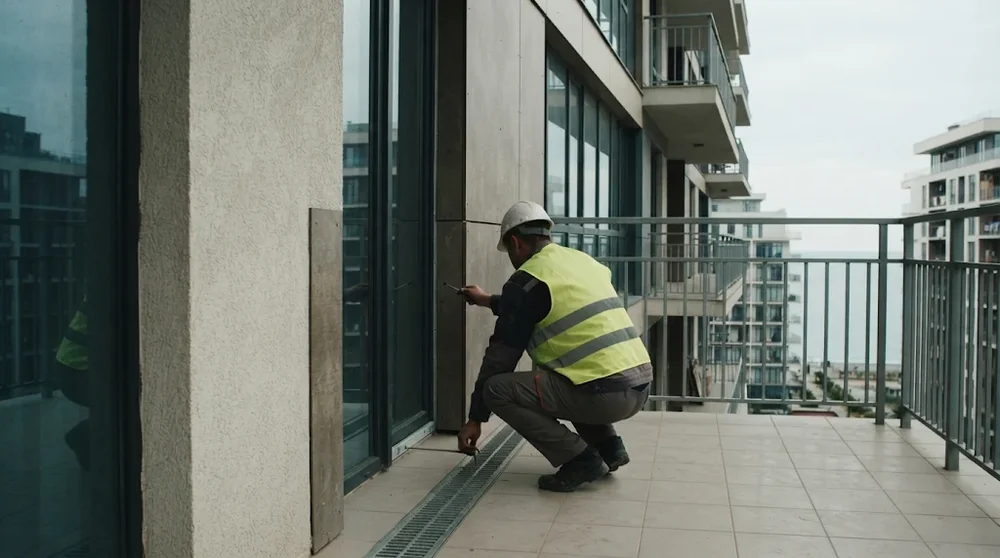
Construction quality and formal commissioning are separate questions, and a buyer needs an answer to both: whether the building is sound, and whether the relevant acceptance documentation exists. A coastal setting calls for careful inspection of moisture control and maintenance, and I make no blanket claim that Batumi buildings are defective.
What an independent engineer should inspect
- Water ingress: staining, damp or efflorescence in basements, stairwells, ceilings and corners.
- Façade condition: cracking, coating failure, corrosion of fixings and sealant joints.
- Windows: frame alignment, seal quality and signs of leakage after rain.
- Drainage: balcony falls, roof outlets, surface water management and basement drainage.
- Ventilation: air movement in bathrooms, kitchens and underground parking.
- Lifts and building systems: maintenance records, safety documentation and fire systems.
- Common areas: the condition of finishes and the evidence of regular upkeep.
Salt air, wind and humidity put more stress on coastal building envelopes, so long-term maintenance planning matters. Gonio and Kvariati, south of Batumi, have different local conditions in terms of slope, drainage and exposure, and each site needs its own assessment.
Commissioning is not the same as ownership registration
Four milestones are distinct: physical completion of the building, relevant commissioning or acceptance documentation, actual handover of your unit, and final ownership registration. A developer can complete one without the others. Ask for the written defect-remedy procedure, including how long the developer has to repair, and keep it with the contract.
Documents to Request Before Paying a Deposit
The minimum due-diligence file consists of the company, land, permit, contract, payment and registration documents, each checked by someone other than the seller. Print this table and tick each line.
The minimum due-diligence file
| Document | Purpose | Provided by | Independent verification | If it does not match |
|---|---|---|---|---|
| Registry of Entrepreneurs extract | Confirms the contracting entity and its representatives | Developer; also obtainable from NAPR | Obtain your own extract | Do not pay until the entity is explained |
| Signatory authority or power of attorney | Shows who may bind the company | Developer | Compare with the registry entry | Invalid signature risk; stop |
| Current land extract and cadastral plan | Shows owner, area and encumbrances | Developer; NAPR | Request a fresh extract by cadastral code | Unexplained owner or seizure is a Stop |
| Development-rights documents | Proves the right to build and sell where the seller is not the owner | Developer or landowner | Lawyer review of term and scope | Investigate; stop if rights are absent |
| Lender consent and unit-release arrangements | Shows how a mortgaged plot releases your unit | Developer and lender | Written confirmation from the lender | Investigate before any payment |
| Construction permit and approved drawings | Confirms the approved building parameters | Developer; municipality | Confirm with the municipal permitting service | Stop if the unit is outside the approval |
| Dated site evidence | Records actual construction progress | Developer and your engineer | Independent engineer’s report | Investigate delays and discrepancies |
| Completion documents of earlier projects | Evidence of delivery history | Developer | Visit the building; check records | Investigate; weigh the lack of record |
| Full draft contract and unit specification | Sets rights, remedies and finish | Developer | Georgian lawyer’s review | Manage by negotiating; stop if refused |
| Payment instructions and invoice | Identifies who receives funds | Developer | Match beneficiary to the contract party; call a known number | Third-party payee is a Stop |
| Proposed registration mechanism | Explains what right is registered and when | Developer; lawyer | Lawyer confirms against the Public Registry rules | Investigate until written |
| Rental-management documents, if offered | Defines operator duties, fees and guarantees | Developer or operator | Check the operator’s registration and terms | Treat income claims as unproven |
What to do when documents are missing
Ask once in writing, with a date for reply. A missing document is an Investigate item, not proof of wrongdoing. A refusal to provide a public-record document such as the land extract is itself informative, and I would pause the transaction until it is resolved.
How to Check a Batumi Developer Step by Step
A ten-step sequence turns the checks above into one procedure that a remote buyer can run through local professionals. The order can change for an individual transaction, but the final recheck should not.
- Identify the contractual entity and the payment beneficiary.
- Verify the company and its representation in the Registry of Entrepreneurs.
- Obtain land and cadastral records yourself.
- Check mortgages, encumbrances and development rights.
- Verify the permit against the advertised unit.
- Review delivered projects and any disputes.
- Inspect the site independently.
- Review the contract, registration mechanism and payment schedule.
- Obtain independent legal and technical findings in writing.
- Recheck material registry information immediately before signing or transferring funds.
The recheck matters because a land extract is a snapshot. A mortgage or seizure recorded after your first check would not appear in the earlier copy.
A remote-buyer workflow can be short. Ask for dated site video with a fixed viewpoint, instruct a local engineer to visit and report, have a Georgian lawyer review the documents and the contract, keep written records of each answer and request a final video call walking through the unit location on the day before payment. Independent professionals reduce the risk that you rely on material produced only by the seller.
When Should You Walk Away from a Developer?
Walk away when a confirmed legal obstacle exists, and investigate when a question remains open. The distinction matters, because treating every missing paper as fatal wastes good projects, while ignoring a real defect costs money. Actual legal conclusions are fact-specific and should come from your lawyer.
| Category | Realistic examples | Proportionate action |
|---|---|---|
| Stop | The seller cannot show a lawful relationship to the land; the required permit is absent or materially inconsistent with the unit; a significant restriction blocks the proposed transaction; an unexplained third-party payment is demanded. | Do not pay. Obtain a written lawyer’s opinion before reconsidering. |
| Investigate | A new project-company structure; a development-finance mortgage with release documents not yet reviewed; limited delivery history. | Request the missing evidence, set a deadline and proceed only if it is satisfactory. |
| Manage | Documented cosmetic defects in an earlier building; negotiable commercial terms such as area tolerance or finish. | Negotiate remedies, price or milestones, and record them in the contract. |
If you would like a second pair of eyes before you commit a deposit, you can request an independent review of the developer and project documents, including the registry extracts, permit and draft agreement. The aim is to give you a documented view of what is verified, what is open and what you could negotiate, with the decision left to you.
Frequently Asked Questions About Batumi Developers
How can I check if a property developer in Batumi is reliable?
Start with the developer’s entry in the Registry of Entrepreneurs, then verify the landowner, construction permit, signatory authority, completed buildings and any material disputes. Inspect the site independently and have a Georgian lawyer review the draft agreement. A recognisable brand or polished showroom does not prove that the specific project company, land and permit are sound.
What documents should I request before buying an off-plan apartment in Batumi?
Request the contracting company’s registry extract, a current land extract, the cadastral plan, the construction permit, approved unit plans, the draft agreement, the payment schedule and written specifications. Where the plot is mortgaged, add the documents showing how your unit will be released. A Georgian lawyer should review the set before you pay a significant deposit.
How do I verify a construction permit in Georgia?
Ask for the permit number, issuing authority, approved drawings and the plot’s cadastral code, then confirm them with the relevant municipality and any official permit records. Compare the approved storeys, building use and project boundaries with the unit you are offered. A sales brochure, render or planning concept cannot substitute for official permission.
Is it safe to buy an apartment in Batumi before construction is complete?
It can be viable, but off-plan buyers carry completion, funding, contractual and registration risks that a finished apartment largely avoids. Safety depends on the particular developer, land title, permit, payment structure and contract terms. Independent checking and milestone-based payments reduce exposure, yet no step can guarantee completion.
What happens if a property developer in Georgia goes bankrupt?
Insolvency can interrupt construction and delay handover, leaving buyers to enforce contractual or registered rights alongside other creditors. The outcome depends on the company structure, land encumbrances, registry status, contract wording and the insolvency proceedings. No universal refund entitlement exists, so take urgent advice from an independent Georgian lawyer rather than assuming the deposit returns automatically.
Can I protect my deposit when buying property off-plan in Batumi?
You can reduce, not eliminate, deposit risk. Verify the seller and bank beneficiary, review land and permit documents, define refund triggers and link payments to measurable milestones. Ask a Georgian lawyer whether registering an obligation or pre-registering a property right is available and useful for your unit. No mechanism should be treated as an absolute guarantee of repayment.
A Decision Process You Can Use Before You Pay
The short answer: a good developer survives verification, and a weak one avoids it. Check the entity, the land, the permit, the track record, the funding, the payment route, the contract, the registration and the building, and record who verified each. Missing evidence is a question; a confirmed legal defect is a reason to stop.
I have lived in Georgia for about eight years, and the discipline I carried over from corporate finance is simple: numbers and documents first, enthusiasm second. Nothing in a brochure, including a rental forecast, should outrank a registry extract you obtained yourself. If the evidence is thin, slow the transaction down; a developer with a sound project will usually accept that.
Legal and financial information disclaimer: this article is general information as of November 2026 and is not legal, tax or investment advice. Fees, procedures and statutes change, and the figures quoted should be confirmed with NAPR and the current consolidated legislation. Nothing here is a guarantee of title, completion, refund, rental income or appreciation. Consult an independent Georgian property lawyer and a qualified building engineer before committing funds.