

Choosing between an unfinished developer unit and an existing registered apartment is a trade-off between price, paperwork, cash flow and timing. A lower-priced off-plan unit may need well over a year and a further finishing budget before anyone can live in it. A higher-priced resale apartment can be inspected, registered and occupied within weeks, but it can carry liens, repair bills or occupants. This guide compares both routes step by step, using documents and arithmetic rather than slogans, with Tbilisi and Batumi as the main reference markets.
Off-plan property in Georgia offers staged payments and a potentially lower entry price, but the buyer carries construction, delay and developer risk plus finishing costs. Resale property offers an identifiable, inspectable apartment and usually earlier occupancy or rental. Compare the all-in completed cost and the verified legal status of each unit before choosing.

Off-Plan vs Resale Property: Key Differences
The short answer: Georgian buyers face three purchase types, not two. An unfinished off-plan unit, a completed unit still sold by its developer and a previously owned resale apartment differ in what the buyer can inspect, when title can be registered and how much money is exposed before handover. The labels ‘new build’ and ‘secondary market’ are marketing categories; the transaction status decides the risk. The comparison below reflects the position as of November 2026.
| Comparison point | Unfinished off-plan unit | Completed developer unit | Resale apartment (previous owner) |
|---|---|---|---|
| Transaction status | Building or unit is still under construction and is sold under a preliminary or sale agreement. | Building is complete and the unit is still held and sold by the developer. | Unit is already registered to a previous owner who sells it on. |
| Unit identification | Defined by plan, floor, number and area in the contract; the physical unit does not yet exist. | Physical unit can be visited and measured. | Physical unit can be visited; a cadastral code identifies it in the Public Registry. |
| Typical payment pattern | Staged instalments tied to a schedule or construction milestones. | Lump sum or a short developer instalment plan. | Deposit, then settlement at signing or registration; mortgage discharge if encumbered. |
| Route to registered ownership | Completion, any required commissioning, unit registration and transfer; certain preliminary interests may be registrable. | Transfer from the developer is registered after the contract is signed. | Transfer from the seller is registered after the contract is signed. |
| Inspection possibilities | Site, show unit, drawings, specification and documents only. | Full inspection of the actual unit. | Full inspection of the unit and the building’s condition. |
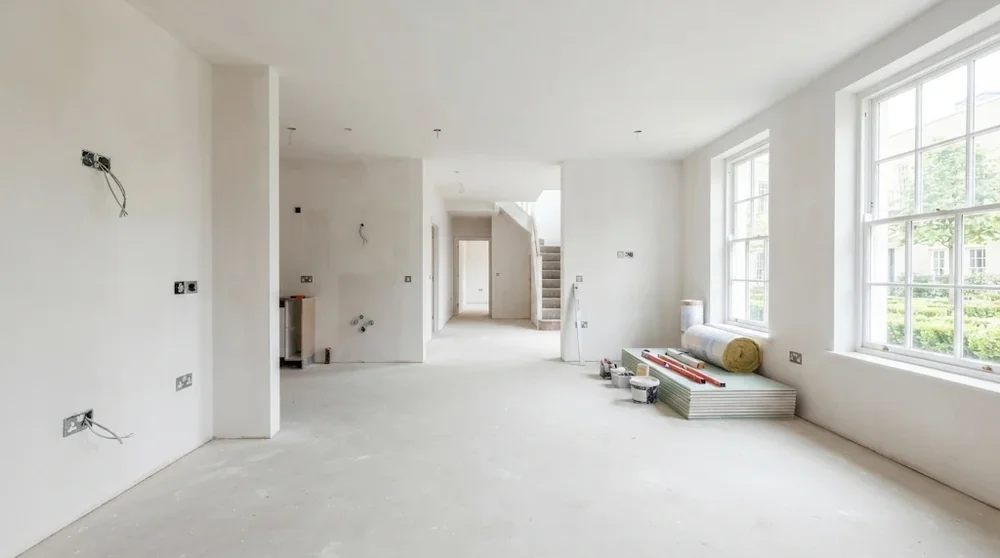
| Finishing | Often black, white or green frame, defined by a contractual annex. | Varies from shell to turnkey; visible before purchase. | Whatever the seller left: refurbished, dated or furnished. |
| Price transparency | Developer price lists; finishing is a separate cost. | Price list plus negotiation; finishing standard is visible. | Asking price is negotiable; comparable sales can be reviewed. |
| Occupancy or rental timing | After completion, handover and fit-out. | Soon after registration, subject to fit-out. | Often within weeks, subject to repairs and vacant possession. |
| Principal risks | Delay, specification changes, developer financial distress. | Defects, encumbrances over the land or unit, unsold-stock pricing games. | Liens, hidden defects, unauthorised alterations, occupants. |
What Counts as Off-Plan Property?
Off-plan property is a unit sold before construction is complete, so the buyer contracts for an apartment described on paper rather than an apartment that can be inspected. The defining feature is transaction and completion status, not marketing language. A building that is substantially constructed but not formally accepted for use may still expose the buyer to important completion and occupancy risks. Its registration status must be checked separately with NAPR: ask for an object-specific registry extract and have a Georgian lawyer confirm whether the relevant unit and rights can already be registered.
Completed developer stock is different. A developer who sells an unsold flat in a finished, accepted building is selling a physical unit, so the buyer can inspect it, but is still dealing with a company rather than a private owner. Documents and warranties differ from a private resale.
Does Resale Always Mean an Older Building?
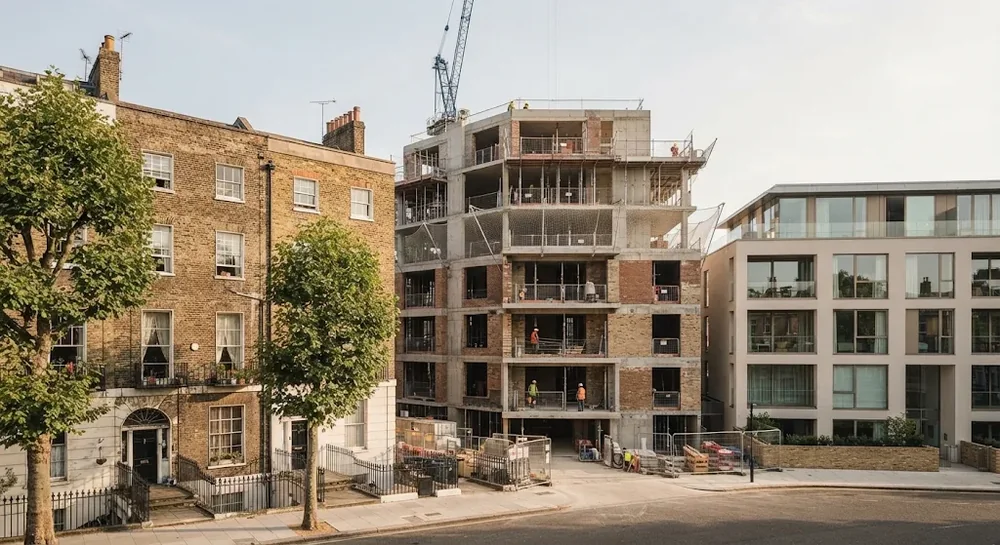
No. A resale apartment is any registered unit sold by a previous owner, regardless of the building’s age. A two-year-old tower can hold a large number of resale units, and Galt & Taggart’s Tbilisi secondary-market price index, as reported in Georgian business media, is limited to buildings with permits issued from 2013 onwards. A newer resale unit is therefore not the same thing as an old Soviet-era flat, and an unsold flat in a new building is not resale at all.
Georgia Property Prices: Compare Equivalent Costs
The short answer: published averages show Tbilisi developer prices running modestly above newer-resale prices, but the two figures describe different cohorts. They do not show that off-plan is cheaper or dearer for a specific apartment. The longer answer: the figures below are indices of reported price levels as of the dates shown, and an index is no substitute for comparing two named units.
I have kept only the two observations that match Georgian business-media reporting of Galt & Taggart. Other monthly readings circulate through secondary sources whose original reports I could not match, so I do not quote them.
| Period | Tbilisi primary-market average (USD per m²) | Tbilisi newer-resale average (USD per m²) | Primary premium over resale (USD per m²) | Verification status as of November 2026 |
|---|---|---|---|---|
| May 2026 | 1,412 | 1,366 | 46 (about 3.4%) | Matches Georgian business-media reporting of Galt & Taggart. |
| July 2026 | 1,426 | 1,372 | 54 (about 3.9%) | Matches Georgian business-media reporting of Galt & Taggart. |
Official statistical context
Geostat, Georgia’s national statistics office, published its third-quarter 2026 Residential Property Price Index on 23 October 2026 (see the Geostat website). That index measures prices of new residential property in Tbilisi. It is not a resale series and not a Batumi series, so it cannot settle the primary-versus-resale question. Use it only as background for the direction of new-build prices, and check the release itself for its exact definitions.
How to read these averages
The secondary-market series covers only buildings with permits issued from 2013 onwards, so it excludes older stock. The primary series covers developer sales. Neither series states a finishing standard, so a developer shell and a refurbished resale flat can sit in the same comparison without anyone noticing.
Listing prices are not transaction prices. Asking prices include negotiating room, and registry-based averages mix unit sizes, districts and currencies. Prices are also quoted in US dollars while contracts are frequently settled in lari, so exchange-rate movements can change the cost in either currency.
Batumi and transaction counts
Batumi price figures circulate under at least three different definitions (turnkey primary, completed primary and municipality-wide averages), and I could not verify any of them against the original reports. A like-for-like Batumi resale figure could not be confirmed either, so this guide quotes none. The same applies to Tbilisi transaction counts, where secondary sources attach the labels ‘primary’ and ‘resale’ in opposite orders. For Batumi, compare named units, not averages.
Why developer shell stock and refurbished resale are not comparable
The mistake I see buyers make most often: comparing a black-frame price per square metre with a refurbished resale price per square metre. A shell needs finishing, and a refurbished flat has already absorbed that cost. The fair test is the all-in price: purchase price plus finishing, furnishing, holding costs and contingency, divided by the area. Section 8 applies that test to a hypothetical pair of apartments.
Buying Off-Plan Property in Georgia: Eight Steps
An off-plan purchase is safest when each step has a document and a decision gate. A gate is a point where the buyer pays nothing further until the evidence arrives. The sequence below reflects Georgian practice as of November 2026 and is general information, not a legal opinion; a Georgian lawyer should review the specific contract before any non-refundable payment.
- Set the budget and the delivery tolerance. Define the all-in budget (price, finishing, furnishing, contingency) and the longest delay you can absorb in months. Decide that figure before viewing any project. Documents: your own cash-flow schedule showing every instalment date. Decision gate: if a 12-month slip would force a distressed sale or missed instalments, choose a completed developer unit or a resale apartment.
- Identify the developer, the contracting entity and the project’s financing. Obtain the company’s identification code, a current extract from the NAPR registry of entrepreneurs, the name and authority of the signatory and proof of any power of attorney. Confirm that the entity receiving your money is the entity named in the contract. Then ask how the project is funded: evidence of construction financing, relevant liabilities, litigation or insolvency indicators and previously delivered projects that you can verify independently. Private developer financial information may be incomplete, so a lawyer or financial specialist should assess what is available. Decision gate: stop if the payee differs from the contracting party, the signatory’s authority cannot be shown, or the developer cannot explain how the project is financed.
- Check the land title and encumbrances. Request a fresh Public Registry extract for the land plot using its cadastral code. Read the owner, any mortgage, seizure, lease or right of construction. If a bank holds security over the land, ask for the lender’s written position on unit sales and releases. Decision gate: an unexplained encumbrance, or no written mechanism for releasing a sold unit from lender security, means no instalment is paid.
- Verify permits, design and construction status. Ask for the construction permit, the approved design documents and the permitted floor areas, then compare them with the area being sold. Visit the site, date-stamp photographs and consider an independent engineer’s progress opinion. Decision gate: no permit, or a permit that does not match the building and area being sold, ends the process.
- Review the preliminary agreement and define the unit. The contract should state floor, unit number, gross and net area, layout drawing, balcony or terrace allocation, completion date, price per square metre, the mechanism for adjusting price if the measured area differs and a specification annex. Here’s the clause I always look for: a limit on unilateral changes by the developer. Decision gate: an undefined unit or an open-ended right to change the specification is a stop.
- Negotiate payment milestones and financial protections. Tie instalments to objectively verifiable milestones, pay only into the contracting company’s named account and retain every receipt. Ask whether any preliminary interest can be registered and what voluntary safeguards the developer will accept (Section 7 compares them). Decision gate: demands for cash, for payment to a personal or third-party account, or for instalments with no milestone link are red flags.
- Inspect completion, commissioning evidence and handover. Before accepting the unit, request evidence that the building has been accepted for use, an as-built area measurement, utility connection evidence and a signed handover record listing defects. Engage an independent technical inspector. Decision gate: do not sign an unconditional acceptance act while defects are open or common areas are unfinished.
- Complete the legal transfer and verify NAPR registration. Sign the final transfer documents, settle the balance on the agreed sequence and lodge the registration application. As of November 2026, NAPR lists processing in four working days for 150 GEL, one working day for 270 GEL or the same day for 350 GEL. After registration, obtain a fresh extract showing your name, the correct area and the cadastral code. Decision gate: hold the final payment until the application is lodged or a controlled settlement mechanism is in place.
My view, as an editorial opinion rather than legal advice: the cheapest protection in an off-plan deal is a refusal to pay the next instalment until the previous milestone is evidenced. The cost is a few awkward emails. The saving, when a project stalls, can be the difference between a delayed unit and an unrecoverable deposit.
Buying Resale Property in Georgia: Seven Steps
A resale purchase removes construction risk but moves the risk into the title, the building and the people living in the unit. The seven steps below can be followed by a non-resident working through a Georgian lawyer and, where legally permitted, an authorised representative. Details are as of November 2026.
- Confirm the actual owner and the authority to sell. Compare the seller’s identity document with the owner named in the Public Registry. If a representative signs, check the power of attorney, its scope, its date and whether it permits sale and receipt of money. If the property is co-owned or belongs to a company, obtain the consents or resolutions required. Gate: any mismatch between seller and registered owner is a stop until explained in writing.
- Obtain a fresh NAPR extract and the cadastral code. Order the extract yourself or through your lawyer on the day before signing; do not rely on one supplied weeks earlier. Match the cadastral code, address, floor, area and owner with the floor plan and the physical unit. Gate: a code that does not match the apartment on the ground is a stop.
- Investigate mortgages, seizures, litigation indicators and third-party rights. Read every registered encumbrance. Ask the seller to confirm in writing that no disputes exist, and consider reviewing the title history where the unit was transferred recently or through inheritance or gift. Gate: an unexplained encumbrance, or an inheritance with unclear heirs, requires legal clearance before any deposit.
- Inspect the apartment, the building and the utilities. Commission a technical inspection covering wiring, plumbing, damp, windows, roof and shared structure, and compare the floor plan with what has been built. Ask for utility account statements and service-charge records. Gate: evidence of unauthorised alterations or structural cracking needs an engineer’s written opinion.
- Verify occupants, lease terms and vacant possession. If the unit is let, obtain the lease, the deposit position and the notice terms, and decide in writing whether you are buying with or without the tenant. Check who holds keys. Gate: if vacant possession is promised, make it a handover condition rather than a spoken assurance.
- Agree written sale terms, payment and any mortgage-release mechanism. State the price, currency, deposit, settlement date, handover date, condition of the unit and what remains in it. If the seller’s bank holds a mortgage, obtain the bank’s written payoff statement and agree a sequence in which the debt is cleared and the registered charge removed. The NAPR Smart Contract service can combine payment and registration for eligible transactions, but it has its own conditions, including personal participation by buyer and seller (see Section 7). Gate: no money leaves your account without a written settlement sequence.
- Submit registration, check the result and complete a documented handover. Lodge the application, choose the processing option (150, 270 or 350 GEL as of November 2026), then collect a fresh extract showing you as owner. Record meter readings, keys, remotes and the condition of the unit in a signed handover note. Gate: release the final payment only against the registered result or the agreed controlled mechanism.
For a non-resident, two practical points save time, and they are two different procedures. In an ordinary transaction, a notarised and properly legalised power of attorney can let a lawyer sign on your behalf, where legally permitted. The NAPR Smart Contract service works differently: according to NAPR’s FAQ, buyer and seller must take part personally in the remote session, and a representative under a power of attorney cannot take part in their place. Do not assume the same representative can complete both.

When Do You Legally Own the Apartment?
The short answer: under Article 183 of the Civil Code of Georgia, ownership of immovable property arises on registration in the Public Registry, administered by the National Agency of Public Registry (NAPR). The consolidated text can be checked in the Civil Code of Georgia on the Legislative Herald. A signed agreement, a paid instalment and a handover of keys are not by themselves registered ownership. The longer answer depends on the underlying property, the agreement and what has been registered.
The position should not be oversimplified in either direction. A preliminary agreement is a contract, and its legal effect depends on its wording. NAPR’s tariff lists the registration of obligations connected with ownership rights as a separate service, so certain preliminary interests may be registrable. But registering an obligation is not the same as registering the buyer as owner. Before treating any registered obligation as payment security, get written legal confirmation of the registration type, its priority against other rights, its enforceability and the effect of any existing mortgage. It would be wrong to say that no off-plan agreement can ever be registered, and equally wrong to say that every off-plan agreement creates ownership.
The ownership ladder for an off-plan purchase
Read the ladder as an illustrative project workflow, not a mandatory legal sequence. It mixes three separate dimensions: contractual rights, regulatory and physical completion, and registered property rights. Their order and dependencies depend on the legal status of the specific property and the documents NAPR accepts.
- Signed preliminary agreement (contractual): creates contractual claims against the developer; it is not ownership of a finished apartment.
- Registered preliminary interest or obligation, where available (registry): may strengthen the buyer’s position against third parties, depending on what is registrable for that project and how it is documented.
- Physical completion (physical): the unit exists, but the building may still lack formal acceptance.
- Commissioning, or acceptance for use (regulatory): a regulatory step confirming the building may be used; it is distinct from handover and from title.
- Handover (possession): keys and possession pass under a signed act listing defects.
- Registered title (registry): NAPR registers the buyer as owner of the unit and issues an extract showing the cadastral code and area.
Timeline comparison of both routes
| Stage | Off-plan route | Resale route |
|---|---|---|
| Before payment | Developer, land, permit and contract checks | Owner, extract, encumbrance and inspection checks |
| Contract stage | Preliminary agreement; staged instalments over the build period | Sale contract with deposit and settlement date |
| Possible registrable interest | Possible for certain preliminary interests; confirm with the registry and lawyer | Not usually needed; direct transfer is registered |
| Completion and handover | Completion, commissioning, handover act, defects list | Handover note at or soon after registration |
| Registered ownership | After unit registration and transfer | After the transfer application is registered |
Registration tariff, as of November 2026
NAPR’s published tariff for registering ownership of immovable property is 150 GEL for four working days, 270 GEL for one working day and 350 GEL for same-day service, as checked in November 2026 on the NAPR fees page (see the NAPR immovable property registration fees). These are registry charges only. Notary, lawyer, agent, translation, certification, extract and inspection costs are separate, and a different tariff line applies to services such as registering mortgages or obligations. Confirm the exact line that applies to your transaction with the registry or your lawyer.
Developer and Resale Due Diligence Checklist
Both routes require the same questions, answered with different evidence. The table puts the two checklists side by side so that a buyer comparing one off-plan project with one resale unit asks equivalent questions of each. It is a general framework as of November 2026, not a substitute for a lawyer’s review.
| Evidence area | Off-plan route: evidence required | Resale route: evidence required |
|---|---|---|
| Legal identity | Developer’s company extract, identification code, directors and signing authority. | Seller’s identity document matched to the registered owner; marital or co-owner consent where relevant. |
| Financial capacity | Project financing structure, construction funding, liabilities, litigation or insolvency indicators, verifiable delivered projects; reviewed by a lawyer or financial specialist. | Not applicable beyond the seller’s debts shown on the extract. |
| Land or apartment registration | Fresh extract for the land plot with cadastral code; confirmation of who may sell units. | Fresh extract for the apartment; cadastral code, area and floor matching the physical unit; title history where warranted. |
| Approvals | Construction permit, approved design, permitted areas and construction stage evidence. | Evidence that the layout matches registered and approved plans; no unauthorised alterations. |
| Lender rights | Lender security over land or project; written consent and release mechanism for sold units. | Registered mortgage or seizure; bank payoff statement and agreed discharge sequence. |
| Technical status | Specification annex, independent progress report, handover inspection plan. | Independent technical report on wiring, plumbing, damp, structure and shared areas. |
| Management obligations | Who manages the building after handover, expected service charge and common-area completion date. | Service-charge statements, arrears confirmation and building-management arrangements. |
| Transaction authority | Authorised signatory; payment only to the contracting company’s named account. | Authorised seller or valid power of attorney; payment only to the registered owner or named bank account. |
| Possession and occupants | Dated handover obligation and defect-repair terms. | Vacant possession or lease terms in writing; keys and meter handover. |
Stop/go red flags
A single unresolved item below is enough to pause a deal. Several are enough to walk away.
- Stop: the seller or developer representative differs from the registered owner or the company’s authorised signatory, and no written authority is produced.
- Stop: an unexplained lien, mortgage or seizure appears on the extract and the other side offers only verbal assurances.
- Stop (off-plan): no construction permit or a permit that does not cover the area being sold.
- Stop (off-plan): the unit is not defined by floor, number, area and specification, or the developer may change it unilaterally.
- Pause (off-plan): the developer cannot explain how the project is financed.
- Stop: the other side refuses independent technical inspection.
- Stop: financing assurances are offered but not backed by a written bank position.
- Go: fresh extracts match the documents, the seller or developer can evidence authority, encumbrances have a written release mechanism and the buyer’s inspector has no unresolved findings.

Payment Plans, Deposits and Contract Protection
The payment structure decides how much money is exposed at each stage. A developer plan spreads payments across construction; a resale settlement concentrates them at the registration date. The contract should say exactly what protects the money at every stage.
- Milestone payments (off-plan): link each instalment to an objectively verifiable event, such as a completed structural frame or issued commissioning evidence, rather than to calendar dates alone.
- Exact unit and area: state floor, number, gross and net area and the price adjustment if the measured area differs.
- Permitted variations: list what the developer may change without consent and what requires written approval.
- Currency and conversion: state whether the price is fixed in US dollars or lari, the exchange-rate source and who bears movements. A dollar price paid in lari instalments exposes the buyer to conversion risk.
- Delay notice and remedies: require written notice of delay, set a long-stop date and define penalties or compensation.
- Refund and termination: specify when the buyer can terminate, how fast money is returned and whether the refund is secured.
- Defect remediation: set a defect-notice period, a repair deadline and a retention or holdback if possible.
- Deposit terms (resale): state whether the deposit is refundable if the extract shows an undisclosed encumbrance, and the cure period for the seller.
- Mortgage release: require payoff, discharge and removal of the registered charge as part of settlement.
- Final registration obligation: require the seller or developer to cooperate with filing and to bear any costs the contract assigns to them.
A refund promise is not a secured refund
A refund clause alone does not ensure recovery if a developer becomes insolvent. It is a contractual promise from the same company that has your money. The safeguards below differ in who stands behind them, and each must be verified independently before you treat it as protection. None is mandatory for all off-plan transactions and none guarantees completion.
| Safeguard | Provider | What is protected | Release conditions | Typical costs | Failure scenarios |
|---|---|---|---|---|---|
| Refund clause only | Developer | Nothing beyond the developer’s own solvency. | Termination events in the contract. | None. | Developer insolvent or disputes the trigger; you are an unsecured creditor. |
| Lawyer-controlled account | Lawyer or law firm | Instalments held pending milestones. | Written milestone evidence agreed in advance. | Legal fees. | Vague release terms, disputed milestones, or an account not truly segregated; check the arrangement itself. |
| Bank guarantee | Bank, at the developer’s request | A stated sum for a stated period. | Terms of the guarantee document. | Usually borne by the developer, often priced into the unit. | Expiry before completion, narrow triggers, or a document that is not what it appears; verify with the issuing bank. |
| Registered obligation | NAPR registration | Priority of your contractual claim against later third parties, depending on registration type. | Matters on the registry record. | Registry tariff line for obligations plus legal fees. | Ranks behind an earlier mortgage; not ownership; effect depends on type and priority. |
| Lender consent and release | Developer’s lender | Your unit’s release from project security on sale. | Written lender undertaking. | Usually none to you. | Verbal assurances only; lender undertaking limited or conditional. |
The NAPR Smart Contract service is a different thing: a purchase-and-registration settlement mechanism. According to NAPR’s published Smart Contract FAQ, as checked in November 2026, the purchase amount is paid through an escrow service from JSC Bank of Georgia, the escrow fee is 35 GEL, the purchase amount can be specified and paid only in lari and the parties need lari bank accounts at that bank. Registration fees follow the standard 150, 270 or 350 GEL tariff (see the NAPR Smart Contract FAQ).
Under the standard Smart Contract settlement option, the bank releases the purchase price after the buyer’s ownership is registered. For eligible transactions involving both a purchase and mortgage agreement, NAPR also describes an instant-transfer option that can release funds after the registry accepts the registration application but before ownership registration. That earlier release carries a different risk profile, because money moves before title does. Confirm in writing which option applies to your deal.
Identity and presence matter too. The FAQ requires buyers and sellers to take part personally in the Smart Contract session, remotely if eligible, with identity verification and the lari bank accounts described above. Signing through a representative under a power of attorney is a different procedure, and a representative cannot take part in a Smart Contract session in your place. The service is not universal construction-stage escrow and does not guarantee completion of an unfinished building.
If you are weighing payment terms or documents for a shortlist and want a practical second pair of eyes, a short WhatsApp conversation is a quick way to clarify questions before you sign. It does not replace independent legal advice from your own Georgian lawyer.
With the payment protections clear, the next practical question is how a bank-held mortgage fits into settlement. Mortgaged units need a specific sequence. Obtain the lender’s written payoff figure, agree who pays what from the sale proceeds and have the bank confirm discharge once paid. Where a buyer’s own bank is financing, the settlement order should be agreed with both banks. Financing is a conditional possibility: a lender makes its own independent decision, and a financing condition in the contract should state what happens to the deposit if approval is refused.
Total Purchase Cost: Off-Plan vs Resale
The figures in this section are hypothetical illustrations, not observed market quotes or Georgian averages. They show how a lower purchase price can end up equal to a higher one once finishing and holding costs are added. Both apartments are assumed to be 60 m².
| Cost line (hypothetical, USD) | Off-plan unit | Resale unit |
|---|---|---|
| Purchase price | 84,000 | 98,000 |
| Finishing or remedial work | 18,000 | 5,000 |
| Furnishing | 4,000 | 2,000 |
| Holding costs and contingency | 2,000 | 3,000 |
| Subtotal before transaction fees | 108,000 | 108,000 |
| Purchase price per m² | 1,400 | about 1,633 |
| All-in subtotal per m² | 1,800 | 1,800 |
Check: 84,000 + 18,000 + 4,000 + 2,000 = 108,000. And 98,000 + 5,000 + 2,000 + 3,000 = 108,000. On this illustration, the off-plan unit is USD 14,000 cheaper to buy and costs the same to complete.
Transaction fees are separate
The subtotal excludes transaction expenses, which should be assessed per deal. NAPR registry fees as of November 2026 are 150, 270 or 350 GEL depending on speed. Notary, legal, agent, translation, extract and inspection fees are in addition. Taxes depend on the seller, the buyer and the contract, so check whether a developer’s quoted price includes VAT or other charges and verify tax treatment with a Georgian adviser.
Illustrative time and cash-flow effects
This is a simplified, non-compounded opportunity-cost illustration using approximate average invested capital. Assume hypothetically that the off-plan unit pays 30 per cent (USD 25,200) at signing and the remaining 70 per cent (USD 58,800) in 18 equal monthly instalments of about USD 3,267. Over those 18 months, average capital outstanding is roughly USD 54,600 (25,200 + 58,800 ÷ 2). At an assumed opportunity cost of 5 per cent a year, carrying that capital costs about USD 4,095 (54,600 × 5% × 1.5). Paying USD 98,000 upfront for the resale unit costs about USD 7,350 (98,000 × 5% × 1.5). Staged payments therefore save about USD 3,255 of capital cost in this example.
The method ignores monthly compounding, exact payment dates and the timing of finishing spend. For a rigorous comparison, build a month-by-month discounted cash flow for both alternatives with the same valuation date, including finishing expenditure, financing charges and rental cash flows.
The saving buys a delay. Assume the unit could be let at USD 10 per m² per month, which is USD 600 a month for 60 m². If the resale unit is lettable from month 3 and the off-plan unit only after completion, 16 months of gross rent (months 3 to 18) would be about USD 9,600. A further six-month construction delay would postpone about USD 3,600 of gross rent. These sums are gross: vacancy, management, service charges and tax are not deducted, and the rent is an assumption, not a market statistic.
For an owner-occupier the comparison is rent paid elsewhere rather than rent earned. Exchange-rate movements can change the lari or dollar cost of instalments, and service charges begin once the building is occupied. A cheaper price is a saving only if the delay, the finishing and the holding costs are smaller than the discount.
Inspection, Completion and Hidden Building Costs
Black, white and green frame are commercial descriptions, not universal legal specifications. Their meaning varies between developers, so the contractual annex must list what is included, room by room.
- Black frame: usually a concrete shell with external walls and perhaps windows, without internal finishing; confirm utility connections, screed and wall surfaces in writing.
- White frame: generally plastered walls, screed and basic utilities prepared for finishing; define the electrical points, plumbing stubs and heating provision.
- Green frame: typically a more advanced stage close to occupation, though the term has no fixed meaning; list floors, bathrooms, doors and fixtures if they are included.
- Technical inspection: engage an independent inspector before accepting any unit and compare the measured area with the contract and permit.
- Actual versus permitted areas: check that balconies, terraces and loft spaces correspond to approved documents, as unauthorised alterations can create title and resale problems.
- Completion, commissioning and handover are separate checkpoints: physical completion means the building is built, commissioning is regulatory acceptance for use, handover is the passing of keys under a signed act and registration transfers title. Verify each separately.
- Defects and waterproofing: test balconies, roofs, basements and bathrooms for leaks, and ask who is responsible for repairs after handover and for how long.
- Utilities and heating: confirm meters, gas, water, electrical capacity and heating arrangements are connected and in the buyer’s or building’s name as agreed.
- Fire safety and lifts: ask for lift commissioning evidence, fire-safety provisions and escape routes, especially in high-rise buildings.
- Sound insulation and common areas: walk the corridors, entrance, parking and courtyard, as unfinished common areas are a frequent source of post-handover disputes.
- Management fees: request the proposed service charge, what it covers and who sets it once the developer leaves.
- Resale-specific risks: old wiring, damp, unauthorised alterations, cracked structural elements and neglected shared areas need an inspector’s opinion before price negotiation.
Opinion, not legal advice: the handover snag list is worth more than any brochure. A buyer who attends the inspection with a technical adviser and records defects before accepting keys has a much stronger position than one who signs a clean acceptance act and finds the leaks in winter.
Tbilisi vs Batumi: Which Market Fits?
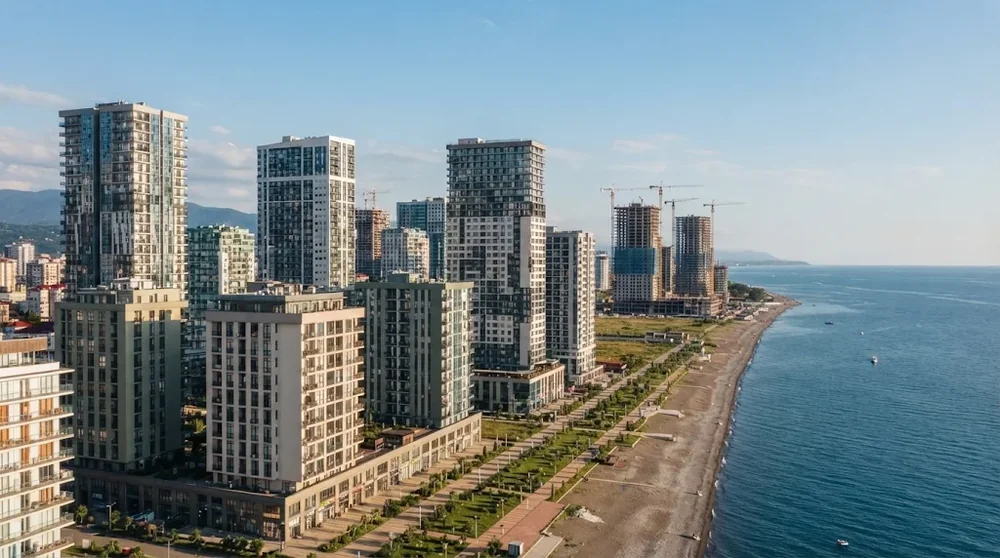
Tbilisi suits longer-term residential use and Batumi suits more seasonal, management-intensive use. That is an editorial assessment based on the nature of each city’s demand, not a promise of returns. Not every coastal apartment is a tourist rental, and not every Tbilisi apartment lets easily.
| Factor | Tbilisi | Batumi (with Gonio and Kvariati as separate submarkets) |
|---|---|---|
| Demand profile | Year-round residential demand from local households, workers and long-stay tenants. | Seasonal visitor demand plus a residential base; summer-heavy. |
| Rental pattern | Long-term lettings dominate for standard apartments. | Short-term lettings dominate for tourist-oriented stock; winter vacancy is typical. |
| Reported gross yield | Galt & Taggart, as reported in Georgian media, cited a gross rental yield of about 8.4% for May 2026, for 50 to 60 m² apartments. | No verified like-for-like figure confirmed; published numbers depend on assumptions and are not net. |
| Operating costs | Service charges, utilities, repairs, tax and occasional void periods. | Management or cleaning charges, platform commissions, utilities, seasonality and furnishing wear. |
| Competing supply | Large pipeline of new projects; tenants can choose between developments. | Many apartment hotels and tourist-oriented developments compete for the same guests. |
| Resale liquidity | Deeper resale market in central, well-connected districts. | Liquidity varies strongly by location, building and finishing. |
| Delayed-construction exposure | Delay costs rent or housing costs for owner-occupiers. | A delay can cost a full tourist season, not just a month. |
| Gonio and Kvariati | Not applicable. | South of central Batumi towards the Turkish border; these are separate submarkets with different access, amenities and demand, requiring individual comparison. |
Gross income is not net income
The Tbilisi yield above is a gross index figure for a particular apartment size, not an outcome for any single property. Three measures are easy to confuse. Gross yield is annual rent divided by price. Operating yield deducts operating costs. Net investor return goes further and also deducts tax, financing charges and capital reserves.
A hypothetical Batumi illustration shows the gap. Assume a 40 m² apartment priced at USD 70,000, let at an average USD 45 a night with 40 per cent occupancy, or 146 nights. Gross revenue is 146 × 45 = USD 6,570, a gross yield of about 9.4 per cent. Deduct a 20 per cent management fee (USD 1,314) and USD 2,800 of other operating costs, itemised as USD 1,200 service charges and utilities, USD 800 repairs and furnishing wear, USD 500 cleaning and laundry, and USD 300 insurance and sundries. The result, USD 2,456, is illustrative operating income before any property taxes, financing charges and capital expenditure reserves, which are excluded from the assumptions. That is an operating yield of about 3.5 per cent, and a net investor return would be lower. These inputs are assumptions chosen to show the arithmetic, not market statistics.
Choosing by use case
A Tbilisi buyer should compare the district’s long-term rents and the competing new supply. A Batumi buyer should test off-season demand, building management quality and whether the unit is genuinely lettable year-round. A buyer considering Gonio or Kvariati should compare those areas with each other and with central Batumi rather than treating them as equivalent. Independent financial assessment of any projected performance is advisable.
Should Foreign Buyers Choose Off-Plan or Resale?
Foreign individuals can generally buy ordinary residential apartments in Georgia, as of November 2026, whether the apartment is off-plan, completed developer stock or resale. Agricultural land is subject to separate ownership restrictions under the Organic Law of Georgia on Agricultural Land Ownership (see the Organic Law on Agricultural Land Ownership, Article 4). Exceptions and ownership structures need specific legal verification, so confirm the classification of any plot or property with unusual land components before committing. Ownership rights, bank financing, tax position and residence status are four separate questions, and each needs its own answer.
Bank financing is an independent lender decision. A Georgian bank may or may not lend to a non-resident, and may lend only in certain currencies, on its own valuation and on its own terms. A financing condition should be written into the contract, with clear consequences for the deposit if approval is refused.
To get a shortlist that reflects your budget, location and holding period rather than whatever is advertised most heavily, a structured selection is usually quicker than browsing listings.
If you want a documented shortlist matched to your budget, location and investment goals, a short questionnaire is a practical starting point.
Remote purchase is possible, but it adds steps, and two procedures are easy to confuse. In an ordinary transaction, a properly authorised representative may act under a notarised and legalised power of attorney where legally permitted, and its scope should be limited to the specific transaction. The NAPR Smart Contract service is different. Per its FAQ, buyer and seller must take part personally in the remote session, with identity verification and lari accounts at the named bank; a power-of-attorney representative cannot take part in their place. Remote personal participation and signing through a representative are not interchangeable.
Buying property does not automatically establish eligibility for a residence permit. A property-based residence application follows separate statutory eligibility and valuation rules that can change. This guide does not quote immigration thresholds; verify current requirements with the competent Georgian authority and a qualified immigration adviser before making residence the reason for a purchase.
Three buyer profiles, each tied to a documented condition:
- Non-resident needing immediate occupation: a resale apartment or completed developer unit, provided a fresh extract, a technical inspection and a dated vacant-possession handover are in the contract.
- Buyer relying on mortgage finance: proceed only with a written bank approval or a financing condition protecting the deposit; the lender’s own requirements on the unit and building decide which route is open.
- Cash buyer with flexible delivery dates: off-plan is a candidate only if the developer passes the financing and title checks in Section 3 and a funded delay tolerance is stated.
Which Property Should You Buy? Decision Matrix
The right route depends on measurable constraints: move-in date, cash available, tolerance for delay and need for rental income. The matrix rates each route as a general guide as of November 2026. Ratings are editorial assessments, not guarantees.
| Buyer situation | Unfinished off-plan | Completed developer unit | Resale apartment | Stop/go condition |
|---|---|---|---|---|
| Moving in within three months | Poor fit: construction and fit-out rarely fit this window. | Good fit if fit-out is minimal. | Good fit if vacant possession is secured. | Go only if handover can be dated in the contract. |
| Flexible 18-24 month horizon | Reasonable fit if delay tolerance is stated and funded. | Good fit. | Good fit. | Go if a delay of 6 months causes no hardship. |
| Limited upfront cash | Staged payments ease early cash needs. | Moderate; depends on developer terms. | Weakest on upfront cash, unless mortgage finance is approved. | Stop if later instalments depend on money not yet secured. |
| Immediate rental-income requirement | Poor fit: no income until completion and fit-out. | Good fit once fit-out is done. | Strong fit if the unit is lettable. | Go only if net income is calculated, not gross. |
| Risk-sensitive non-resident | Weak fit: highest documentary and delivery risk. | Reasonable fit with inspection by a representative. | Reasonable fit with fresh extract and inspection. | Stop if no independent lawyer or inspector is engaged. |
| Newer completed unit in a newer complex | Not applicable until completion. | Strong fit. | Strong fit in post-2013 buildings. | Go if commissioning and area evidence are provided. |
Three mandatory no-go conditions
- The seller or developer cannot prove authority to sell, or the payee does not match the contracting party.
- A fresh Public Registry extract shows an unexplained encumbrance without a written release mechanism.
- The other side refuses an independent technical inspection or a documented handover.
An optional scoring framework
Score each candidate unit from 1 (weak) to 5 (strong) on five criteria, using the same scales for every unit, then add the results. Treat the total as a tie-breaker only.
| Criterion | 5 means | 1 means |
|---|---|---|
| Time to use | Usable within 3 months | Usable after 24 months or more |
| Available cash | Total cost is covered with a reserve | Later payments depend on money not yet secured |
| Documented legal risk | All items on the checklist evidenced | Several items missing but explainable |
| Construction-delay tolerance | A 12-month delay causes no hardship | Any delay forces a sale or missed payments |
| Net holding-period cost | Lowest all-in cost after rent or rent avoided | Highest all-in cost |
Unresolved legal or title issues are not a low score. They are disqualifying conditions, and no price discount compensates for them.
A short selection method
- Choose two real candidate units and open one spreadsheet with identical rows for both.
- Enter the price, finishing, furnishing, holding costs and contingency to produce the all-in total and the all-in cost per m².
- Add the months until occupancy or letting and the gross rent or rent avoided per month.
- Deduct vacancy, service charges, management and tax to reach net income.
- Score documentation risk (low, medium, high) from the checklist in Section 6.
- Reject any candidate that triggers a no-go condition, then compare the rest on all-in cost, the scores above and time to use.
A construction-stage discount or an advertised return does not justify overlooking a title or financing problem. Price is the last variable to settle, not the first.
Next Steps Before Reserving a Property
- Shortlist two comparable apartments, ideally one off-plan or completed developer unit and one resale unit.
- Request the cadastral identifier of each unit and the developer’s company details.
- Obtain fresh Public Registry extracts and compare them with the seller’s or developer’s documents.
- Calculate the full cost to use: price, finishing, furnishing, holding costs, contingency and separately assessed transaction fees.
- Confirm the occupancy or letting date you actually need.
- Arrange an independent Georgian lawyer and a technical inspector.
- Negotiate a reservation only when the checks above are complete and no no-go condition remains.
If useful, you can request a documented comparison of candidate apartments in Tbilisi or Batumi, covering documentation status, all-in price and realistic handover requirements, with practical verification support. No outcome is guaranteed, and the comparison does not replace your own legal and technical advice.
Frequently Asked Questions
Is it safer to buy a resale apartment than an off-plan property in Georgia?
Not automatically. A resale apartment avoids construction risk because the unit exists and its registered owner can be checked, but it can still carry mortgages, disputes, hidden defects or unauthorised alterations. Off-plan adds developer and delivery risk. As of November 2026, both routes need independent legal and technical review. Order a fresh NAPR extract before paying any deposit.
Can I own an off-plan apartment before construction is finished?
A preliminary agreement gives contractual claims. NAPR also lists registration of obligations tied to ownership rights, which may strengthen your position but is not registration as owner. Whether a specific unit can be registered earlier depends on its legal status and documents. Ask a Georgian lawyer to confirm in writing what is registrable for your project, as of November 2026.
Is off-plan property always cheaper than resale in Tbilisi?
No. Georgian business media reporting of Galt & Taggart gives July 2026 Tbilisi averages of USD 1,426 per m² for developer apartments and USD 1,372 per m² for newer resale, so developer stock was dearer. The cohorts differ in finishing and age. Compare two named units on all-in cost, including finishing and holding costs, before judging value.
What happens if a developer delays or abandons construction?
Outcomes depend on the signed contract, registered rights, available security, creditor claims and the developer’s solvency. No universal recovery guarantee exists, and a refund clause alone does not secure repayment. Before paying, check delay remedies, termination terms and lender security, and tie instalments to verified milestones. A lawyer should review the contract first.
Can foreigners buy both off-plan and resale apartments in Georgia?
Foreign individuals can generally buy ordinary residential apartments through either route, as of November 2026. Agricultural land is subject to separate restrictions. Buying an apartment does not automatically create residence rights or secure mortgage approval. Before committing funds, have a lawyer verify the property’s classification, title and any financing or immigration conditions that matter to you.
Which is better for rental income: off-plan or resale property in Batumi?
A registered, usable resale apartment can usually start earning sooner, while an off-plan project needs construction, handover and often fit-out first. In Batumi, net income also depends on seasonality, location, management charges and competing supply. Compare net annual income over the whole holding period, not advertised gross yields, and ask for actual off-season occupancy data.
My Verdict on Off-Plan vs Resale
The short answer: neither route is better in the abstract. Off-plan can offer staged payments and a lower entry price, but it exchanges that for delay, specification and developer risk plus a finishing bill. Resale offers a unit you can inspect and a quicker path to use, but the risk moves into title, encumbrances and the building’s condition. Completed developer stock sits between the two and deserves its own comparison.
From the deals I’ve handled, the decision usually turns on three numbers: the all-in cost per square metre, the months until the apartment is usable and the amount of delay you can afford. In my own experience, buyers who write those down before viewing make calmer decisions than buyers who start with a brochure. That is a professional observation, not an independent legal opinion.
Whatever you choose, verify the registered records, the permits and the signed specification yourself or through a Georgian lawyer. A brochure is not evidence, a discount is not a protection, and a projected yield is not a verified income.
Disclaimer: this article provides general information as of November 2026 and is not legal, tax, financial or investment advice. Property-specific advice should be obtained from a qualified Georgian lawyer. Rental, price and cost figures in this article are illustrative or reported by third parties, and projected performance needs independent financial assessment. No completion, legal protection, resale, residence permit or return is guaranteed.