
A registered company name on a reservation form tells you very little. In Georgia, the brand on the hoarding, the company that signs your contract, the owner of the land and the holder of the construction permit can be four different legal entities. Sales brochures rarely explain how they connect, and that is the gap this guide closes for one specific project.
To check a property developer in Georgia, verify the company’s legal status and authorised representatives through the National Agency of Public Registry (NAPR). Then obtain the land’s cadastral extract, confirm construction permits with the relevant municipality, investigate mortgages and restrictions, and examine completed projects. Company registration alone does not establish a project’s legality.

Do Property Developers Need a Licence in Georgia?
The short answer: no single ‘developer licence’ proves that a Georgian residential project is legal, and buyers should not use one as their test. The longer answer: the phrase hides several separate legal concepts, and each is proved by a different document.
Company registration versus construction permission
Company registration creates a legal entity in the register kept by NAPR. It does not decide whether a particular building may be built on a particular plot. That permission comes from a project-specific construction permit issued by the competent municipality under the Code of Georgia on Spatial Planning, Architectural and Construction Activities. The construction permit is also listed among the permits regulated by the Law of Georgia on Licences and Permits (legal position as of November 2026).
Professional certification is a separate matter from the developer’s company status. Article 140 of the Construction Code names the categories of specialists subject to mandatory certification: architects entitled to endorse architectural designs, responsible civil engineers, design experts and certain administrative specialists. Certification attaches to the individual professional, not to the developer as a company. The statute sets the categories, while implementing rules, commencement dates and transitional arrangements are set out separately and have been amended in recent years. None of this creates a universal ‘developer licence’.
In practice, ask the seller in writing to name the responsible architect, the responsible engineer and the design expert for your project. Where certification is legally required for their role, request their certification details, then ask your Georgian property lawyer to check those details against the implementing regulations and transitional provisions that apply to the project’s date. Whether a given professional needed certification depends on the project and the relevant date, so do not assume a universal requirement (position as of November 2026).
| Concept | What it can prove | What it cannot prove |
|---|---|---|
| Business registration (NAPR extract) | The company exists, its status, its representatives | Lawful construction, land rights, financial strength |
| Professional certification of individuals, where legally required | A person met a specific qualification rule for a defined role | That your project has a valid permit or sound finances |
| Construction permit | Municipal authorisation for a defined building on a defined plot | That the building was built as approved or can be commissioned |
| Commissioning (acceptance into operation) | The completed building was accepted for use | That your apartment is registered in your name |
| Registration of property rights | Who holds which registered right in a property | Quality of construction or the developer’s reliability |
What a licence can and cannot prove
Asking for a ‘developer licence’ is insufficient because it merges five different questions: corporate legality, lawful construction, commissioning, future apartment ownership and investment reliability. A company extract answers only the first. A permit speaks to the second, commissioning to the third, and registration of your apartment to the fourth. None of them answers the fifth, which depends on finances and delivery record.
A legitimate registered company is not necessarily a legally permitted or financially reliable project.
How to Check a Developer in the NAPR Business Registry
The NAPR entrepreneurs’ register lets you confirm whether the company named in your draft contract exists, who represents it and what its status is. How long it takes depends on how clean the data is. A straightforward company with a known identification number is quick, and a name-only search can take much longer. The workflow below can be repeated for any developer.
Step-by-step company lookup
- Request the contractual legal name and identification number. Ask the seller in writing for the exact name in the draft agreement, its legal form (LLC or JSC) and the Georgian company identification number, which for companies is usually nine digits. A marketing brand is not a legal name.
- Open the register from the official site. Start from the NAPR website and use the e-services entry for the Registry of Entrepreneurs and Non-Entrepreneurial (Non-Commercial) Legal Entities. Menu names and service pages change, so follow the entry point NAPR currently publishes rather than a link a salesperson sends you.
- Search by identification number first. Enter the number in the identification-number field. It is the most reliable identifier, because Latin-script spellings of Georgian names vary widely. Name search is the fallback.
- Try Georgian-script name variants. Enter the name in Georgian script, with and without the legal-form prefix (შპს or სს), and the registered English name if one exists. A missing result is not proof that the entity does not exist; it may reflect spelling, a name change or recent re-registration.
- Separate three levels of record. The free on-screen lookup shows basic data and is a screening tool. The official extract is a paid, dated document you order from NAPR, and it is the one to rely on and file. Where the registry makes them available, the underlying registration documents (for example, the charter or a representation decision) can be requested separately and are worth reading when the extract is unclear. Do not accept a PDF forwarded by a salesperson.
- Record the audit details. On every extract, note the issue date, the reference number and how you obtained it (online order or counter). Save the original file unaltered.
- Record the status and authorised representatives. Note whether the company is active, any liquidation, reorganisation or suspension entries, and who may sign alone or jointly.
- Compare against the draft contract. The name, identification number, address and signatory must match the agreement exactly.
NAPR fees as of November 2026, per the published NAPR fee schedule for business extracts. For an extract, the online (internet-request) rate is 13 GEL on the one-working-day service and 52 GEL on the same-day service. The standard non-internet rate is 20 GEL one-working-day and 75 GEL same-day. An English-language extract adds 26 GEL. Confirm the figures when you order. Charges by agents or lawyers are commercial fees, not official tariffs.
How to read the extract
The incorporation date shows how long the company has existed, but a new project company is common and not suspicious in itself. The registered address shows where official notices go, not where the developer operates. Management and representation entries show who may bind the company, and whether two signatories must act together. Where partners or shareholders are disclosed, they are the registered holders. That is not the same as ultimate beneficial control, which a single extract will not necessarily reveal, particularly where a holder is itself a company. If a signatory acts under a power of attorney rather than a registered representation right, that document must be reviewed separately for scope and validity.
The extract cannot show solvency, litigation exposure or whether the company holds a permit.
The 2026 data-alignment deadline. NAPR announced that certain entities registered before 1 January 2022 had to bring their data into line with the new Law on Entrepreneurs by 1 April 2026. Entities that failed to comply faced suspension of registration and would no longer be issued extracts. The obligation did not apply equally to every legal form. On 4 June 2026, NAPR announced that affected businesses can restore their registration status by bringing their registration data into compliance by 1 April 2027 (position as of November 2026).
For a buyer, suspension is not a technicality. It restricts the company’s representative authority, its ability to dispose of property and its banking operations. If a developer’s registration shows as suspended, or you cannot obtain an extract, treat it as a transaction-level stop condition until the status is restored and a fresh extract proves it. Ask the developer in writing for an explanation and ask your lawyer to check the position before any money moves.
What to do when names differ
The mistake I see buyers make most often: accepting a contract in the name of one entity while all the marketing refers to another. If names differ, ask in writing for the corporate link between them and for the permit holder’s identity. Do not pay until the contracting entity is documented and the signatory’s authority is confirmed.

Match the Developer, Landowner and Permit Holder
A recognisable developer brand often advertises a project while a separate project company signs the contract. A third party may own the land, and a fourth entity may hold the permit. The task is to identify each role by document and confirm that the chain between them is lawful and complete.
Why project companies matter
A special-purpose vehicle (SPV) is a company set up to build one project. Developers use SPVs to ring-fence project risk and to satisfy lenders, and an SPV is not suspicious in itself. It does mean that the group’s reputation does not automatically stand behind your contract. Ask whether the parent company guarantees completion in writing, and what the SPV’s own assets are.
| Role | Entity to identify | Where it appears | Proof of connection | If it does not match |
|---|---|---|---|---|
| Advertised brand | Group or marketing name | Website, brochure | Corporate ownership records and any signed guarantee; a written statement alone only explains, it does not bind | Brand may have no obligation to you |
| Contracting entity | Seller in your agreement | Draft contract, NAPR extract | Extract and signatory authority | Do not sign until explained |
| Registered landholder | Rights holder on the property extract | Public Registry real estate extract | Registered development or land-use rights, or owner’s agreement and consent | Seller may lack authority to sell |
| Permit holder | Named holder on the construction permit | Permit and municipal record | Permit transfer or amendment decision, or documented permit arrangement | Check who may lawfully build and sell |
| Payment beneficiary | Account holder for your payments | Contract payment clause | Bank details in the contract itself | Treat as a stop condition |
The evidence chain to request
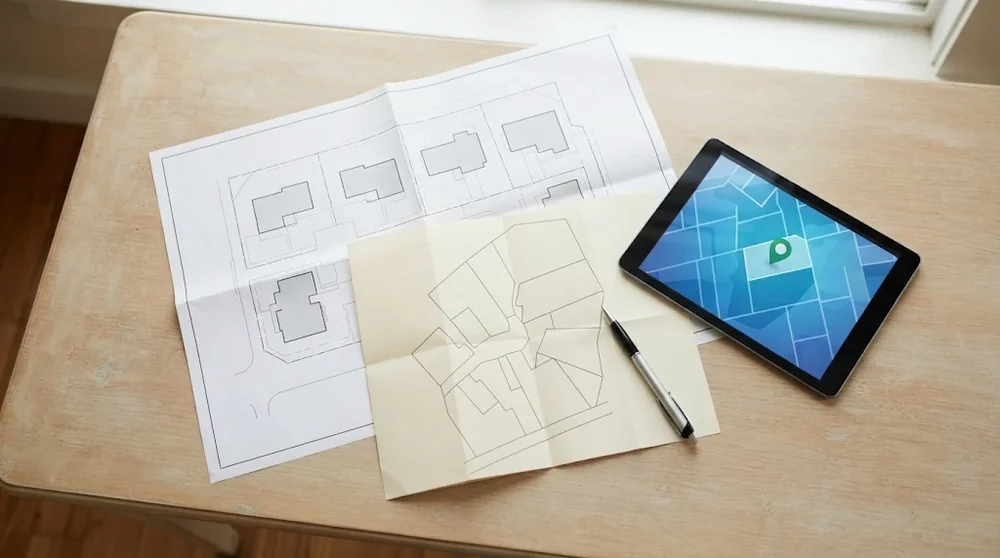
A corporate relationship alone does not authorise development, sale or a guarantee of performance. Ask for the chain, document by document:
- Corporate ownership records showing how the brand, parent and SPV are connected.
- The land-title extract showing the registered holder.
- Registered development or other rights, where the SPV is not the landholder.
- The landowner agreement and written consent to the sale, where applicable.
- Documentation naming the permit holder, plus any transfer or amendment decision where the holder changed.
- Any parent-company guarantee, signed by a person with authority, stating what it covers.
How to resolve an entity mismatch
Where the landholder is not the seller, request documented development rights, such as a registered right or a contract with the owner, plus the owner’s written consent to the sale. Where an agent signs, request a power of attorney and check its scope and validity. A representative’s authority comes from the extract or from a document, never from a business card.
Verify the Land Title and Cadastral Extract
Land checks start with the plot’s cadastral code. A current Public Registry real estate extract shows who holds registered rights over the plot and what burdens are registered against it. An old extract or a marketing plan cannot establish the land’s status today.
Reading the property extract
- Get the cadastral code in writing. Ask the seller for it, then find it on the permit and sales plan.
- Check whether the parcel still exists in that form. Plots are sometimes subdivided, consolidated or given a newer cadastral identifier. Confirm that the advertised code is the current one and has not been replaced.
- Order a current extract. As of November 2026, NAPR’s schedule for land extracts lists an electronic (internet-request) extract at 13 GEL on the one-working-day service and 52 GEL same-day. The standard counter rate is 20 GEL and 75 GEL respectively. A cadastral plan, which shows boundaries, is listed at 7 GEL (one working day) and 26 GEL (same-day) in the informational services fee schedule. Registration-related fees are set out in the Civil Code framework and NAPR’s published tariffs; confirm the current figure when you order.
- Check the registered holder and legal basis. Look for ownership, or a lease or development right, and the basis on which it was registered.
- Compare plot identifiers and area. The cadastral code, area and boundaries should agree across the extract, permit, sales plan and contract.
- Read every entry in the burdens and rights sections. Use the interpretation guide below to sort each one.
- Look beyond the extract for other restrictions. See the note below on what the registry does not show.
- Repeat before payment. Order a fresh extract on the day you pay; registrations change.
Interpretation guide: what each entry means
Different kinds of entry sit in different parts of an extract, and not all restrictions appear in the same place. The table is a screening aid, not legal advice.
| Entry type | What it generally signals | Can it obstruct your transfer? | Separate check needed |
|---|---|---|---|
| Ownership entry | Registered owner and the basis of acquisition | Yes, if the owner is not your seller or is a co-owner who has not consented | Seller’s authority; co-owner consents |
| Lease or development right | A registered right to use or build, often time-limited | Yes, if it expires before completion or does not cover sale of units | Contract with the owner; term and scope |
| Mortgage | Security for a lender’s claim | Possibly; depends on the security and the release arrangements | Lender documents (see the mortgage section) |
| Attachment (arrest) | Restriction arising from enforcement or court proceedings | Often yes; it can block or complicate registration | Lawyer review of the underlying proceedings |
| Public-law restriction | Limits arising from planning, protection zones or similar rules, where recorded | Usually limits what may be built rather than blocking a sale | Municipal planning documents; competent authority |
| Registered contractual right or obligation | A recorded claim of a third party, such as another buyer or a lessee | Possibly; may compete with your right | The underlying contract |
| Disputed claim or pending proceedings | A challenge to title or a related dispute, where recorded or discoverable | Potentially serious | Court records through your lawyer |
What the registry shows and what it does not
The Public Registry extract shows registered rights and burdens: ownership, leases, mortgages, attachments and similar registered entries. It is not the place to learn everything. Zoning, permitted height and density sit in municipal planning documents. Coastal restrictions and environmental limitations may need separate documents from the competent authorities. Some disputes may only be visible through court or enforcement records, not the property extract. Treat the extract as one layer, and ask your lawyer which additional searches the plot needs.
What a mortgage or attachment means
A registered mortgage is security granted to a lender, usually for a loan. It is not automatically wrongdoing. The effect depends on the exact registered security and the transaction structure: a sale may be legally possible while the property remains encumbered, and lender consent alone does not necessarily remove a registered mortgage. Your objective is a documented, enforceable and independently verified arrangement that protects the right you are buying, including discharge and registration where required (see the mortgage section below). An attachment is a restriction imposed through enforcement or court proceedings, typically linked to a dispute or debt, and it can block or complicate transfers. A land-use restriction is a different matter again: it limits what may be built, regardless of any debt.
Land rights that require further investigation
One registry field never settles whether land may be developed. Unclear ownership history, co-owners, or a right that expires before completion all warrant a lawyer’s review.
Hypothetical example, not a real record: the sales plan names one plot, the permit lists a neighbouring plot, and the extract shows a different registered holder from the seller. That combination is unresolved, not proof of fraud. It means no money moves until the lawyer has reconciled all three documents.
Verification, not suspicion, is the working rule here.
How to Verify a Construction Permit in Georgia
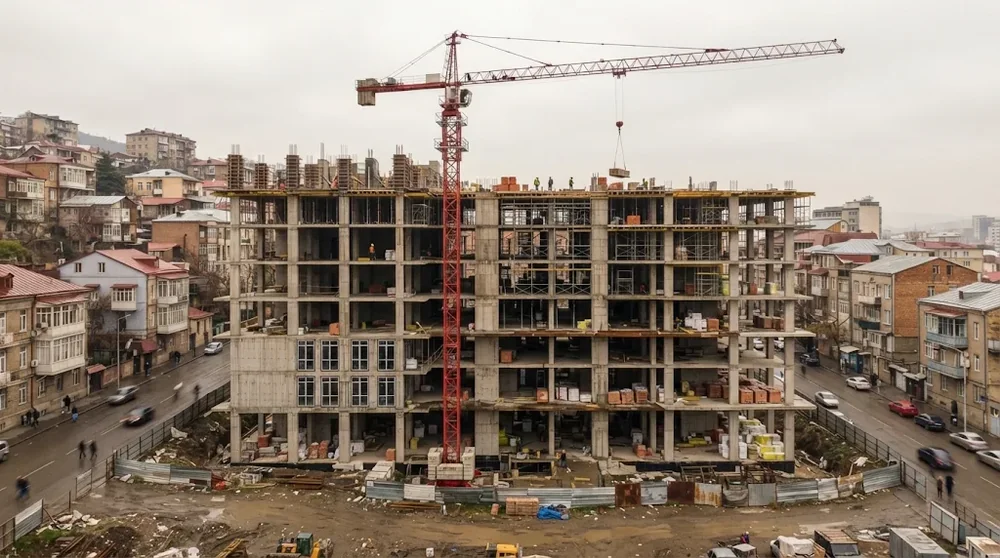
A construction permit is a municipal authorisation for a specific building on a specific plot, and it is the central document for off-plan due diligence. Verify the permit’s existence, holder, plot, approved scope, current status and amendments with the municipality, not only through the seller’s copy.
Documents to request
- The permit number and the permit itself, stating the holder and the cadastral plot.
- The municipal decision and any approved design documentation.
- Approved drawings showing the number of buildings, storeys and permitted uses.
- All amendments to the permit and the revised drawings.
- The permit’s current legal status: validity period, and any extension, suspension or cancellation decision.
- Any construction-stage or phase conditions attached to the permit.
- Written confirmation of how your unit corresponds to the approved plans.
Verify the permit with the municipality
- Identify the issuing authority for the plot. In Tbilisi, permits are handled through Tbilisi City Hall’s architecture services, including the Tbilisi Architecture Service. In Batumi, start with the Batumi municipal construction authority. Municipal practice on how records are requested and issued differs, so ask the authority which service channel handles permit information for your plot, and use only a channel the authority itself confirms. For any other location, ask the seller which authority issued the permit and confirm it from the permit itself.
- Write to the authority. Send a written enquiry quoting the cadastral code, permit number and permit holder. Ask it to confirm the permit’s current legal status, any extensions, amendments, suspension or cancellation decisions, and to provide the approved drawings and stage conditions. Ask for a certified or officially confirmed copy of the permit record, and keep the reply with its date and reference.
- Use an electronic record only if the authority confirms one exists. I do not rely on a public portal unless the municipality itself tells me which one covers that permit. A missing online entry is an unanswered question, not evidence of illegality.
- Compare the record against what is sold. Check holder identity, plot, authorised number of buildings and storeys, uses and validity. The originally issued permit is only the starting point: an extended, amended, suspended or cancelled permit is a different legal position.
- Check amendments. A building sold at more storeys than the latest approved version is a serious warning sign.
Permit versus commissioning
As a general overview for projects that require the relevant permit stages, construction permitting moves through development conditions, approval of the architectural-construction design, issuance of the construction permit, construction, and finally commissioning (acceptance into operation). These are different decisions. Planning conditions and design approval are not the final authorisation to build; the construction permit is. Amendments can change the approved scope later, and commissioning comes at the end.
This sequence is not identical for every project. The documentation, permit procedure and commissioning requirements depend on the building class and the law in force, so check the relevant provisions of the Construction Code (as of November 2026) for your building. Confirm the stage reached; a pending permit is not an issued one.
Completion of construction does not by itself establish that an apartment can be registered as a separately owned object. Commissioning governs lawful operation of the building, and registration of the unit with NAPR is a separate step. Your lawyer should map both for your project.

Check Developer Finances, Disputes and Track Record
Public records give only partial evidence of a developer’s financial condition. A clean registry extract does not prove solvency, so the goal is a proportionate investigation of history, disputes and delivery, with its limits stated plainly.
A source-by-source framework
- Corporate insolvency entries: check the NAPR extract for liquidation, reorganisation or similar entries for the company and related entities. You can do this yourself with the identification number. Registered insolvency proceedings are formal, and different from an ordinary contractual dispute.
- Judicial records: court decisions and pending cases generally need a lawyer, who can tell you which court records are accessible for this developer and search by name and identification number. I do not give a portal address I have not confirmed is currently available. Name matching is imperfect, and some matters are confidential, so a null result is not a clean bill of health.
- Enforcement-related restrictions: these show up as attachments or similar entries on the land extract, which you can order yourself using the cadastral code. Enforcement proceedings against the company itself are a lawyer’s search. They signal enforcement against the holder, which is different from a commercial disagreement with a customer.
- Lender security: the registered mortgage tells you a bank has taken security. Read it together with the mortgage section below.
- Project-delivery history: compare promised and actual completion dates for earlier projects, and check whether earlier projects were completed by the same entity or by a successor.
Keep confirmed proceedings (a court decision, an enforcement entry, a registered insolvency) apart from informal customer complaints. Complaints on social media or in chat groups are leads to investigate, not established facts, and the absence of any search result cannot establish that no dispute exists. Even after all of this, undisclosed liabilities remain possible, and public sources cannot rule them out.
Corporate warning signs
- Corporate history: frequent name changes, repeated new SPVs for each phase, or unexplained changes of management.
- Insolvency or liquidation entries for the company or related entities that appear in the registry record.
- Related companies: check whether earlier projects by the same people were completed by the same entity or by a successor.
Completed-project evidence
- Visit at least two completed buildings where possible and ask for their commissioning documents.
- Speak to owners about handover delays, defects and whether units were registered promptly.
- Compare promised and actual completion dates for earlier projects.
Bank financing versus buyer-funded construction
- Bank involvement can be a positive signal because a lender has examined the project, but it is not a guarantee of completion.
- If construction is funded mainly by buyers’ instalments, ask how payments are tied to construction milestones.
- Do not accept unverified statements about financial strength, and do not treat public records as a substitute for specialist financial review.
My view, not a legal rule: from the deals I’ve handled, delivery history tells you more than any brochure. A developer who cannot show one finished, commissioned building should be priced as a higher-risk counterparty.
What If the Developer Has a Bank Mortgage?
A mortgage on the developer’s land is common and does not automatically prevent an off-plan purchase. A construction loan secured on the land is a financing structure; a registered encumbrance affecting your transaction is a legal risk to your rights. The difference lies in whether release arrangements for your unit are documented and legally effective.
Mortgage due-diligence questions
- Who is the lender, and what does the registered mortgage secure?
- Does the lender consent in writing to sales of units in this project?
- Will the specific apartment or relevant property right be released from security, and when?
- Who receives your money, and into which account?
- What happens to your payments if the developer defaults on the loan?
Release conditions, partial discharge and payment allocation
A general release undertaking is weak if it cannot be tied to your actual transaction. Ask for a written document that identifies five things:
- The secured property, meaning your unit or the relevant property right, by cadastral reference and unit number.
- The lender, by exact legal name.
- The specific release conditions: what must be paid, by whom, and what the bank will do once it is paid.
- The payment recipient and the deadlines, including how your instalments are allocated between the developer and the lender.
- The registration steps that follow, so the discharge appears on the extract.
When the unit has no cadastral identifier yet. A future apartment may not have a separate cadastral identifier until the building is commissioned and the unit can be registered. In that case, require a documented mapping between the project parcel, the approved plans, the building, the floor and your unit, together with a lender-approved mechanism for releasing the legally identifiable right once registration becomes possible. Without that mapping, a release undertaking has nothing precise to attach to.
The release mechanism must be legally effective for the property right you are buying, and an independent lawyer should review it. Where the lender is willing to confirm directly, a confirmation from the lender itself is stronger than one relayed through the developer.
Documents needed before payment
Ask for the lender’s written consent or release undertaking, the payment mechanism in the contract and, after any discharge, an updated registry extract confirming it. Conditional payment, where instalments follow documented release steps, is safer than oral assurances.
A documented, manageable financing structure is acceptable for many buyers. Unresolved release arrangements are a stop condition. Never rely on verbal promises from a salesperson about the bank.
Review the Off-Plan Contract Before Paying
An off-plan contract is where verified facts become enforceable obligations. Each clause below should be reviewed against the documents you have collected, and a Georgian property lawyer instructed by you should confirm the legal effect. Remedies need to be assessed for enforceability and for whether the money can actually be recovered under Georgian law.
Contract clauses that matter
| Clause | What to check | Risk if weak |
|---|---|---|
| Parties | Exact seller name, identification number, signatory authority | Wrong or unauthorised counterparty |
| Property description | Cadastral references, floor, unit number | Unclear object sold |
| Approved plan | Floor plan matching the permit drawings | Unit differs from what is permitted |
| Unilateral changes | Limits on the seller changing plans, layout or specification without your consent | Unit altered after you pay |
| Price and currency | Total, currency, exchange-rate mechanism if relevant | Price drift |
| Payment stages | Instalments linked to construction milestones | Paying ahead of progress |
| Milestone evidence | Measurable, independently verifiable conditions, for example a technical inspector’s report | Milestones certified only by the seller |
| Deadlines | Completion and handover dates | Open-ended delay |
| Specification | Annex describing finishes and fittings | Disputes over quality |
| Defects and remedial work | Defect-notice procedure, repair deadlines, retention or warranty period | No practical route to fixes |
| Area tolerance | Permitted variation and price adjustment | Paying for area not delivered |
| Delay remedies | Penalties, termination rights | No practical remedy |
| Force majeure | Narrow definition, time limits, no blanket excuse for delay | Open-ended excuse for non-delivery |
| Commissioning obligation | Who must obtain commissioning, by when, and the consequence if it is not obtained | Handover of a building not accepted for use |
| Handover versus registration | Whether handover of keys and registration of your unit are separate steps, and who is obliged to complete each | Possession without registered title |
| Lender-release cooperation | Seller’s duty to obtain the lender’s release and cooperate in registration | Unit stays under the developer’s mortgage |
| Assignment | Right to resell or transfer | Locked-in position |
| Termination and refunds | Triggers, refund timing, source of funds | Unrecoverable deposit |
| Registration | Which right is registered and when | Unprotected position |
| Dispute resolution | Governing law, forum | Unaffordable enforcement |
A reservation fee secures a unit for a short period and is not necessarily a binding purchase. A signed preliminary sale agreement can create enforceable obligations, so read it as binding unless your lawyer advises otherwise.
Registration of future rights
Keep four positions separate:
- Registered ownership: for an existing, legally identifiable immovable property, ownership generally depends on a valid written transaction and registration in the Public Registry under Article 183 of the Civil Code.
- Preliminary registration, where available: some structures may allow a right relating to a future object to be recorded before completion. Whether that is possible depends on the legal identification of the unit, the project documents and the transaction structure.
- Registration of a contractual obligation or claim, where legally supported: a recorded claim protects your position differently from ownership and is not title.
- An unregistered preliminary agreement: a contract between you and the seller only, with no public record behind it.
Whether any registration route is open to you depends on conditions your lawyer must confirm: the project parcel must be identified, the building and unit must be identifiable in the approved plans, and the contract must describe the object precisely enough to be recorded. I cannot promise that a particular route will be available for your project. Commissioning is a separate legal process under the Construction Code that governs acceptance and lawful operation of the building.
Ask your lawyer which right can be registered at the Public Registry at signing, whether the contract allows preliminary registration or only records an obligation, and what the exact legal consequences are. A preliminary agreement does not automatically transfer title, and a registered contractual right is not the same as registered ownership.
The answer varies by contract structure, so treat generalisations, including mine, with caution until a lawyer has read your draft.
Check this before you sign — here’s why: do you understand exactly which right will be registered in your name, and when? Your independent Georgian lawyer must answer that. If you want help with property selection or coordinating the documents described in this guide, you can message me; that is not a substitute for independent legal representation.
That question shapes everything else in the contract, so keep a written answer from your lawyer on file.
Protecting deposits and milestone payments
Do not assume that your deposit will be held in escrow; establish whether a legally effective escrow or another payment-protection arrangement is available for your transaction. A structure in which your money is released against verified milestones is worth negotiating. Here’s the clause I always look for: a refund obligation with a fixed deadline. Read it with one caution. A refund promise from an SPV is an unsecured contractual claim, only as good as the SPV’s assets on the day you need it. Naming a source of funds does not make the money available.
An independently established protection is different: a legally effective guarantee, an escrow arrangement or other suitable security held by a third party. Whether any of these is available, and whether it is enforceable, depends on the transaction and the provider. Have your lawyer test it.
Illustrative clause concept, not ready-to-sign legal language and subject to independent legal review: if the seller fails to complete the building by the agreed date plus a stated grace period, the buyer may terminate by written notice, and the seller shall refund all sums paid within a fixed number of days, with that obligation supported by a named guarantee or escrow arrangement.
Have your lawyer adapt it to your contract and Georgian law.
Developer Checks in Tbilisi, Batumi and Gonio–Kvariati
National business registration works the same way across Georgia, so the NAPR company check does not change by city. Municipal construction approvals and site-specific restrictions do, and they require local verification. Identify the exact jurisdiction of the plot before naming any municipal office.
| Check | Tbilisi | Batumi | Gonio–Kvariati |
|---|---|---|---|
| Permit authority | Tbilisi City Hall architecture services | Batumi municipal construction authority | Batumi municipal authorities; confirm the parcel and responsible authority |
| Main focus | Permit amendments, dense-development limits | Height, commissioning, planning restrictions | Coastal, environmental, planning and terrain constraints, where they apply to the parcel |
| Documents | Permit, approved drawings, amendments | Permit, approved height and storeys, commissioning status | Permit plus parcel-specific planning, environmental and boundary documents |
Tbilisi
Dense urban planning means a neighbouring plot’s approved changes may affect your building. Confirm amendments with the Tbilisi Architecture Service and the municipal records, and compare approved height and use against the sales brochure.
Batumi
For high-rise projects, verify approved height and storeys, the permit holder’s identity and commissioning status. Local zoning and planning conditions can limit what is built nearby.
Gonio and Kvariati
Gonio and Kvariati form the Gonio–Kvariati administrative unit of Batumi Municipality, according to Batumi City Hall’s 2026 official publications. Ask Batumi City Hall to confirm the jurisdiction of your parcel in writing, and start with the competent Batumi municipal authorities. Always confirm the exact parcel boundaries and the authority responsible for the relevant permit, and check unusual boundary cases against the cadastral record.
Then request the documents that actually govern the plot: the current municipal planning documents for the area, any parcel-specific restrictions recorded by the competent authorities, and the approved site plan from the permit. Coastline protection, environmental requirements and slope stability are checks to run where they are relevant to your parcel, not assumptions that apply identically to every plot. A sea view is not a legal entitlement to an unobstructed future view, and neighbouring plots may be developed.
If you are comparing projects across these three areas and want the legal checks matched to a realistic shortlist, a short brief on budget and location goals is a sensible first step.
A shortlist helps because each project then gets its own document-led check rather than a generic one.
Developer Due Diligence Checklist: Documents and Red Flags
The table below converts the workflow into evidence you can collect for one real project. An unanswered question is not confirmed unlawful conduct, so each warning sign leads to an action rather than an accusation. NAPR figures are as of November 2026 and are detailed in the registry and land-title sections above; confirm municipal availability, fees and professional charges directly rather than relying on any amount quoted to you.
Documents to collect
| Check | Document or evidence | Authority or verification channel | Cost / timeframe | Warning sign | Action |
|---|---|---|---|---|---|
| Corporate status | Current business-register extract | NAPR entrepreneurs’ register | NAPR extract tariffs (registry section) | Name or ID differs from contract; suspended registration | Pause; request explanation |
| Signatory authority | Extract entry or power of attorney | NAPR; lawyer review | Extract fee; lawyer’s fee to be agreed | Signer not listed | Pause; request authority |
| Land rights | Real estate extract and cadastral code | NAPR / Public Registry | Land-extract tariffs (land-title section) | Seller is not the holder | Request development rights evidence |
| Parcel boundaries | Cadastral plan | NAPR | Cadastral plan tariff (land-title section) | Code replaced or parcel subdivided | Confirm current identifier |
| Construction permit | Permit, decision, drawings, current status | Competent municipality | Confirm with the municipality | No record found | Request written municipal confirmation |
| Amendments | Amended permit, revised drawings | Municipality | Confirm with the municipality | More storeys sold than approved | Stop pending resolution |
| Restrictions | Extract entries; planning documents | NAPR; municipality | Extract tariffs; other documents to be confirmed | Unexplained restriction | Lawyer review |
| Bank discharge | Lender consent, release undertaking | Lender; updated extract | Updated extract fee; lender charges to be confirmed | Verbal promises only | Stop until documented |
| Past projects | Commissioning records, owner feedback | Site visit; owners | Your time and travel | No completed project, or complaints | Pause; assess risk |
| Commissioning | Acceptance-into-operation record | Municipality | Confirm with the municipality | Occupied without record | Request confirmation |
| Preliminary agreement | Full draft with annexes | Your lawyer | Professional charges to be agreed | Annexes withheld | Pause |
| Payment account | Account details in contract | Contract; bank | No official fee | Account holder is not the seller | Stop |
| Refund terms | Refund clause, security for refund | Your lawyer | Professional charges to be agreed | No deadline, remedy or security | Negotiate before signing |
Decision Framework: Proceed, Pause or Stop
| Outcome | When it applies | What it means |
|---|---|---|
| Proceed to independent professional review | Documents match and only normal questions remain | You may move to lawyer, technical and financial review. This is not approval to transfer funds. |
| Pause and request documents | Information is missing or inconsistent but not contradicted | No payment until the gaps are closed in writing. |
| Stop pending legal resolution | The seller lacks authority, the permit does not match what is sold, or mortgage release is undocumented | No payment until your lawyer confirms the issue is resolved. |
Remote verification
Overseas buyers should order extracts themselves, not rely on screenshots from salespeople. Instruct a lawyer who acts for you, not one introduced and paid by the developer, and do not accept unofficial ‘clearance certificates’. Here is the procedure I follow:
- Obtain the original identifiers from the developer: company name and identification number, cadastral code, permit number.
- Order the official extracts independently, yourself or through your own lawyer.
- Save each issue date and reference number alongside the file, unaltered.
- Request official confirmation of the permit from the municipality in writing.
- Compare versions of the plans against the approved drawings and amendments, and note any differences.
- Keep all correspondence and every payment instruction, and check any change of bank details by calling a number you already hold.
- Verify the representative’s authority through the extract or a power of attorney.
- Arrange an independent technical inspection of the site and, later, of the finished unit.
Keep everything in one evidence file, with a dated index, held by you or your authorised lawyer. If a dispute ever arises, that file is what you will rely on.
A sensible next step is a document-led independent assessment before any reservation or payment: collect the items above, then have your lawyer review them against the draft contract.
FAQ: Verifying Property Developers in Georgia
Do property developers need a licence in Georgia?
A company’s registration and its permission to build are separate matters in Georgia. Buyers should not rely on a supposed universal developer licence as proof that a residential project is legal. Check the registered company, the project’s construction permit and any professional certification requirements that apply to the people and activities involved under current Georgian law.
How can I check whether a Georgian developer is legally registered?
Request the developer’s full legal name and identification number, then search the National Agency of Public Registry’s entrepreneurs’ register. Order a current extract and check the company’s status, authorised representatives and registered details. Match the findings against the name and signatory in your purchase agreement. A legally registered business is not automatically a trustworthy developer.
Where can I verify a building permit in Tbilisi or Batumi?
Ask for the permit number, approved drawings and municipal decision, then write to the competent municipal authority. In Tbilisi that is the city’s architecture services; in Batumi, the municipal construction authority. Ask them to confirm that the cadastral code, permit holder, approved drawings and amendments match the building being sold, and keep their reply with its date and reference.
How do I check whether a developer owns the land?
Request the plot’s cadastral code and obtain a recent real estate extract from the Georgian Public Registry. The document identifies the registered rights holder and relevant encumbrances. If the developer does not own the land, ask for evidence of its registered development or other legally sufficient rights, and have an independent lawyer assess whether those rights support the proposed sale.
Can I buy an off-plan apartment if the developer has a mortgage?
A registered mortgage does not automatically prevent an off-plan purchase, but it can materially affect your rights. Ask who holds the mortgage, whether the lender consents to the proposed transaction and how your unit will be released from security. Obtain enforceable written arrangements and independent legal advice before transferring money. Do not rely on verbal promises.
What documents should I request before paying a developer in Georgia?
Before paying, request the developer’s current business-register extract, the land’s cadastral extract, the construction permit and approved plans, evidence of development rights, information about mortgages, and the complete draft agreement with annexes. Verify the seller’s signing authority and payment-account details. For off-plan purchases, have a Georgian property lawyer review registration options, deadlines, penalties and refund provisions.
The Verdict: What a Verified Development Looks Like
A project passes the core documentary checks when four things line up. The contracting entity, the landholder and the permit holder are identified and connected by documents. The permit and its amendments match what is being sold. Any mortgage has a written, unit-specific release path. And the contract ties your payments to verifiable milestones, with a refund that is backed by something more than a promise.
Passing those checks does not guarantee delivery, financial stability, construction quality or a successful investment. Those need independent legal, technical and financial assessment, and I would not pay without all three.
My own habit, as a former corporate-finance analyst who reads these contracts line by line, is simple: no deposit until the extracts are dated, the permit has been confirmed by the municipality and my lawyer has seen the full draft agreement. Gaps do not prove wrongdoing, but they decide whether I would pay.
Disclaimer: This article provides general information as of November 2026. It does not replace project-specific legal, technical or financial advice, and laws, fees and procedures may change. Confirm current requirements with the relevant Georgian authority and an independent Georgian property lawyer before signing or paying.